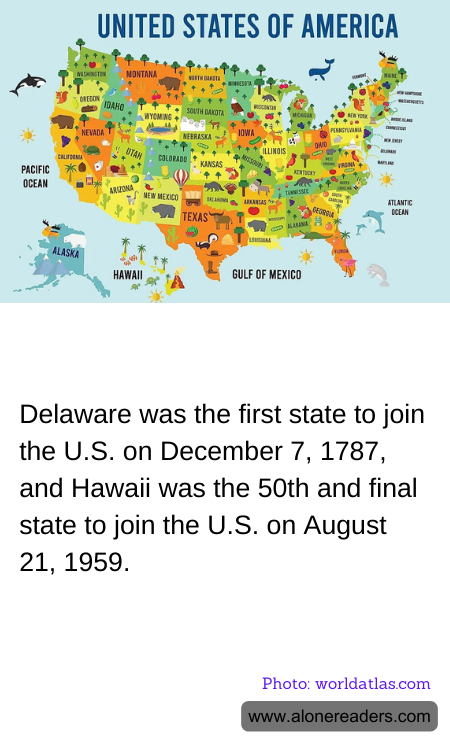
Delaware and Hawaii, the first and the last states to join the United States, respectively, encapsulate the expansive timeline of American statehood. Delaware, commonly referred to as "The First State," earned its nickname by being the first to ratify the U.S. Constitution on December 7, 1787. This historic act set the precedent for other states to follow and helped pave the way for the establishment of the United States as a unified nation. Located in the Northeast, Delaware played a crucial role in the early economic development of the new country, benefiting from its strategic position along the Atlantic coast.
On the other end of the spectrum and nearly two centuries later, Hawaii's journey to statehood presents a different yet equally pivotal chapter in American history. Hawaii, an archipelago located in the central Pacific, was originally an independent kingdom known for its rich indigenous culture and strategic military and economic position. It became the 50th state of the United States on August 21, 1959, marking a significant expansion of U.S. territory into the Pacific. The inclusion of Hawaii not only symbolized the nation's growing geopolitical influence but also reflected the diverse cultural fabric that the United States had come to represent.
The contrasts between Delaware and Hawaii extend beyond their respective entries into statehood. Geographically, Delaware is part of the mainland with close ties to both the industrialized Northeast and the rural South. Its economy has historically centered around agriculture, manufacturing, and commerce. Hawaii, surrounded by the Pacific Ocean, features a unique landscape that includes tropical rainforests, active volcanoes, and revered surf beaches. Its economy relies heavily on tourism, military defense, and the export of tropical specialties like coffee and macadamia nuts.
Despite the differences, both states exemplify the varied nature of American identity and development. Delaware's early adoption of the Constitution helped lay the foundations of American governance, while Hawaii’s later inclusion highlighted the country's evolving cultural and geopolitical ambitions. Together, these states underscore the chronological and cultural breadth of the United States, illustrating how the nation has grown and adapted over time. They remind us of the rich tapestry of histories and geographies that compose the United States, each state contributing its unique elements to the whole.
