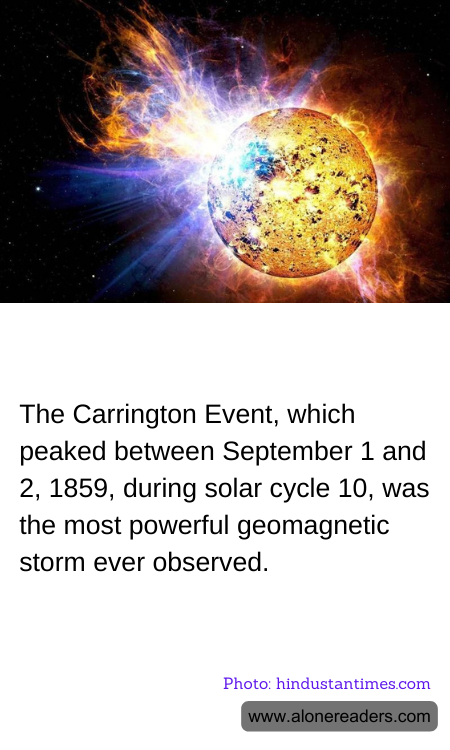
In the early hours of September 1, 1859, Richard Carrington, a British amateur astronomer, witnessed an extraordinarily intense white light flare on the surface of the sun. What he observed was the precursor to the largest geomagnetic storm on record, now known as the Carrington Event. This solar storm, which reached its peak on September 1 and 2, inflicted significant disruptions on the primitive telecommunication systems of the era and showcased the sun's potential to affect earthly technologies.
The Carrington Event occurred during solar cycle 10 and was marked by numerous sunspots and solar flares, the intense burst Carrington observed being the most significant. Following the solar flare, a coronal mass ejection (CME) - a massive burst of solar wind and magnetic fields rising above the solar corona - hurtled towards Earth. Approximately 18 hours later, this CME collided with Earth's magnetosphere, a much quicker arrival than the usual several days it takes for such solar particles to reach Earth.
The impact of this collision was a spectacular display of auroras, natural light displays usually seen in polar regions, which were now visible as far south as the Caribbean. Reports indicate that the skies were so bright that miners in the Rocky Mountains woke up and started preparing breakfast, thinking it was morning. Telegraph systems across Europe and North America failed, with some telegraph operators reporting electric shocks. The widespread telegraph disruptions - including pylons throwing sparks and papers catching fire - underscored the vulnerability of technology to solar activity.
Though in 1859 the reliance on electricity was not as widespread as today, the implications of a similar event occurring in the modern era are considerable. Today, a storm of such magnitude could disrupt satellite operations, communications, navigation systems, and major power grids. A 2012 study estimated that the economic impact of a similar event today could exceed $2 trillion globally, highlighting the need for improved forecasting and mitigation strategies for solar storms.
The Carrington Event remains a potent reminder of the sun's influence on Earth. It pushes the ongoing scientific endeavor to better understand solar behavior and underscores the necessity of preparing for extreme space weather events, safeguarding our modern technological infrastructure against the next major solar storm.
