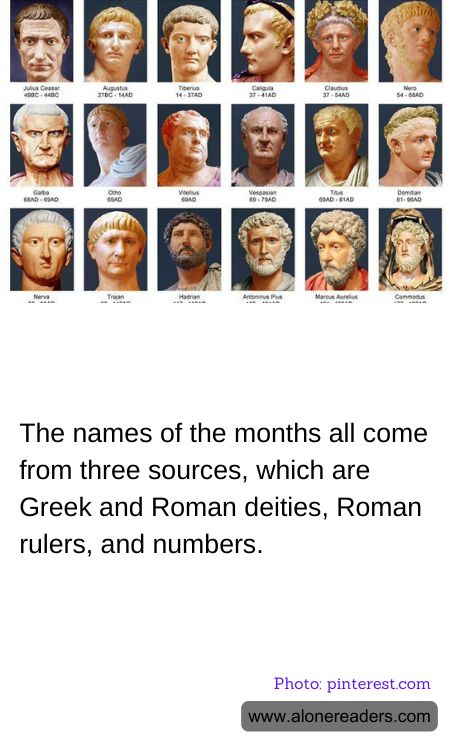
The names of the months we use today are deeply rooted in history, primarily derived from Greek and Roman mythology, names of Roman emperors, and Latin numbers. This fascinating blend reflects the evolution of calendar systems in Western culture, particularly the influence of Roman civilization.
January is named after Janus, the Roman god of beginnings and transitions, aptly symbolizing the start of a new year. He is often depicted with two faces, one looking forwards and the other backwards, embodying the idea of reflection on the past and the future. February derives from Februarius, named after Februa, an early Roman festival of purification, reflecting the month's position in the old Roman calendar as a time for preparation and renewal.
March was named in honor of Mars, the Roman god of war, which is fitting given that in ancient Rome this month signaled the resumption of military campaigns that had been paused for winter. April's etymology is less clear, but it is often associated with Aphrodite, the Greek goddess of love and beauty, indicating the springtime blooming and fertility. May and June take their names from the goddess Maia, a figure of growth and increase, and Juno, the goddess of marriage and childbirth, respectively.
The later months of the year—July and August—highlight the influence of Roman rulers in the naming of the months. July was originally called Quintilis, the fifth month in the ancient Roman calendar. However, it was renamed Julius in honor of Julius Caesar following his reform of the calendar. Similarly, August was renamed from Sextilis in honor of Augustus Caesar, who also made significant modifications to the calendar.
The final four months of the year, September, October, November, and December, derive their names from the Latin words for their positions in the old calendar — septem, octo, novem, and decem, meaning seven, eight, nine, and ten, respectively. This naming convention underlines the Roman approach to numerical order and organization, despite these months shifting in the modern calendar.
The cumulative effect of these origins is not just a practical method of dividing the year but a mosaic of cultural significance and historical layers that reveals much about how past civilizations understood and measured time. Each month's name carries echoes from a distant past, offering a glimpse into the daily life, priorities, and belief systems of ancient Rome, shaping the modern Western experience of time.
