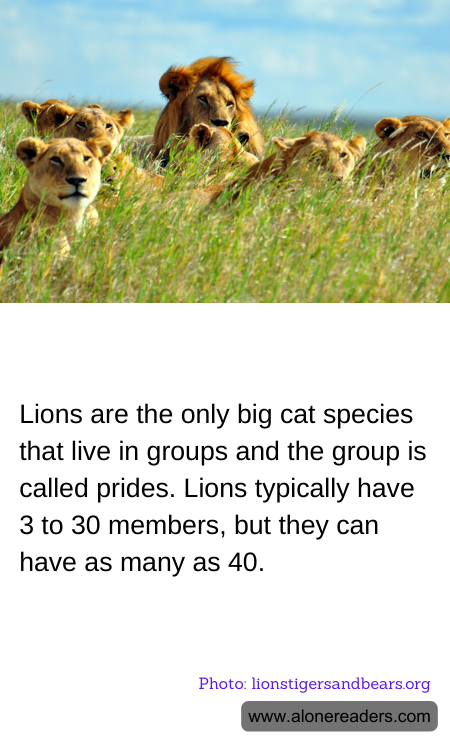
Lions, known for their majestic presence and regal behavior, stand out as the only big cat species that form social groups, known as prides. This unique social structure is a fundamental aspect of their survival and evolutionary success. A pride of lions can vary significantly in size, typically comprising anywhere from three to thirty members, although in some rare cases, groups can swell to as many as forty members.
The composition of a lion pride is primarily made up of female lions, with a few males and their offspring. Female lions in the pride are usually related—mothers, daughters, grandmothers, and sisters—and they exhibit extraordinary cooperation. This cooperation is crucial, particularly in hunting, where their coordinated efforts allow them to successfully hunt prey that would be too large or too fast for a single lion. The females also share the responsibility of caring for the cubs, which increases the cubs' survival rates.
Male lions, generally fewer in number, play a different role. Their primary responsibilities are to protect the pride’s territory and defend it from intruders and rival males. This is vital for the pride's longevity and the safety of the cubs, as incoming males often kill any existing young to bring the females back into estrus, thereby ensuring their genes are passed on to the next generation.
The structure of a pride allows lions to maintain a certain order and stability, which is essential in the unforgiving environment of the African savannahs and grasslands where they predominantly live. The social nature of lions provides numerous benefits, including increased vigilance and protection, efficient hunting, and a stable reproductive environment, aspects that solitary big cats may lack.
Interestingly, the social behavior of lions has also made them a subject of fascination in human culture, symbolizing strength and unity in various traditions and folklore around the world. This admiration is also mixed with concern, as lion populations have dwindled due to habitat loss, human-wildlife conflict, and poaching. Conservation efforts continue to play a vital role in preserving these magnificent creatures and the complex social systems they have developed.
