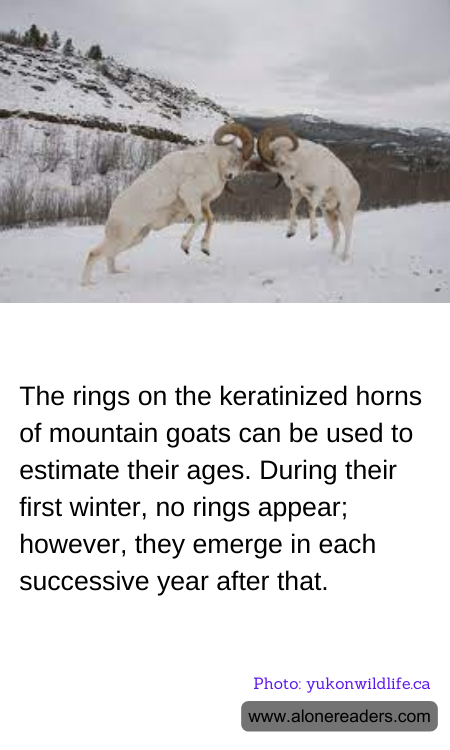
Mountain goats, known for their rugged climbing abilities and distinctive appearance, also carry a unique biological marker that allows researchers and wildlife enthusiasts to estimate their age: the rings on their keratinized horns. These rings are akin to the growth rings found in trees, where each ring generally represents a year of life. Unlike tree rings though, mountain goats do not start developing these rings on their horns until after their first winter.
The process by which these rings form is deeply linked to the seasonal variations in the goat's environment. During the harsh winter months, the growth of the goat is more constrained, leading to the formation of a visible ring on the horn. In contrast, during the warmer seasons when food is more plentiful, the growth is more abundant and uninterrupted, which is reflected in the spaces between the rings.
To age a mountain goat, one would count the number of these distinct rings. However, it's important to note the absence of a ring for their first winter, which can easily lead to underestimating the animal’s age if not taken into account. This method of aging is particularly useful for wildlife management and conservation efforts, providing vital data on the demographics of goat populations in specific areas.
Moreover, studying horn growth can also offer insights into the overall health and vitality of the population. For instance, slower horn growth might indicate nutritional deficiencies or environmental stressors affecting the goats during certain years.
This natural method of aging found in mountain goats is not only a fascinating example of how animals have adapted to their environments but also a critical tool in wildlife management and ecological studies, helping to ensure these majestic animals continue to thrive in their mountainous habitats.
