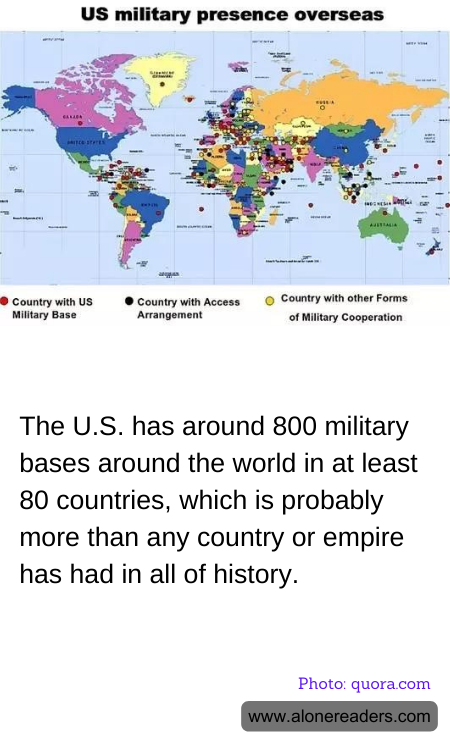
The global military presence of the United States is unprecedented, with approximately 800 military bases spread across at least 80 countries. This extensive network of military installations far exceeds that of any other nation in the world today, and indeed, likely surpasses any empire in history in terms of both scope and breadth. These bases vary in size and function, ranging from small drone bases to massive installations that resemble small American towns, complete with schools, supermarkets, and fast food restaurants.
The reason for this vast network of military bases can be traced back to the end of World are II, when the U.S. began establishing overseas bases to project its power and influence globally. This strategy was intended to ensure economic dominance and to preempt any threats to U.S. interests. Bases such as Ramstein in Germany, Camp Humphreys in South Korea, and Al Udeid Air Base in Qatar facilitate rapid deployment of military forces and provide strategic advantage in terms of global surveillance and reconnaissance capabilities.
The presence of U.S. military bases globally also plays a critical role in American foreign policy. They serve as vital hubs for logistics and operations, supporting military interventions and peacekeeping missions. Furthermore, these bases are pivotal for forging alliances, as they often come with mutual defense agreements and economic aid packages that bind the host countries more closely to the U.S.
However, this widespread military presence has also drawn significant criticism and controversy. In several countries, the presence of American bases has been associated with environmental damage, cultural disruption, and a local perception of loss of sovereignty. Protests and opposition from local communities are not uncommon, particularly in places like Okinawa, Japan, where the impact on local populations and environments has been profound.
Nonetheless, the strategic advantages provided by this network of bases seem to ensure their continuance in the near future. The debate continues about the role of U.S. military might in global politics, balancing acts of defense, provocation, and diplomacy. As the world moves further into the 21st century, the strategic decisions about where to maintain or close bases will likely reflect shifting geopolitical priorities and changing international landscapes.
