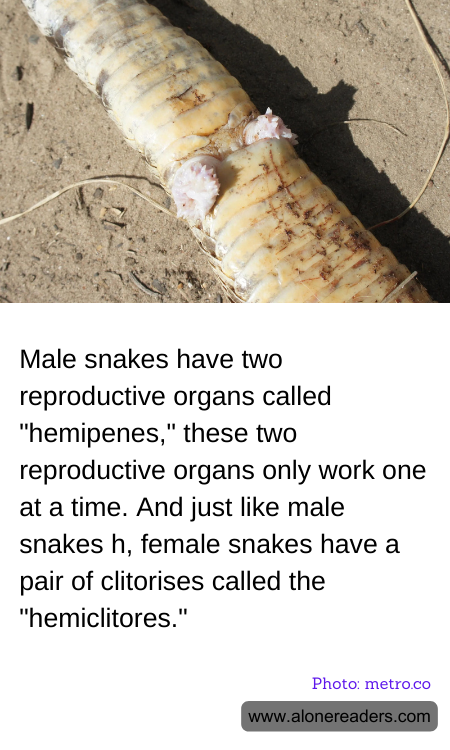
Snakes, as fascinating and diverse as they are in their ecological niches, also display a unique anatomy when it comes to their reproductive organs. Unlike most mammals, male snakes are equipped with two reproductive organs, known as hemipenes. These are essentially paired structures located at the base of the tail, only one of which is used during mating. This dual structure, however, does not imply that both are used at once; rather, snakes alternate between the two, possibly as a way to avoid wear and tear or to increase their chances of successful fertilization.
The hemipenes are not externally visible, resting inside the snake's body while not in use, and are everted for mating. The complex, often barbed or hooked morphology of the hemipenes can vary significantly across different species, reflecting the diversity in mating strategies and behaviors observed among snakes. This intricate development ensures an effective transfer of sperm, crucial for reproduction in environments where successful mating can be a rare opportunity.
Complementably, female snakes are equipped with a pair of clitorises, known as hemiclitores. While less discussed, these structures reflect the complexity of snake reproductive anatomy. The hemiclitores are thought to play a role in the actual mating process, although their precise function and importance are less understood compared to the male's hemipenes. Much like the varied hemipenes, hemiclitores are thought to adapt based on the specific mating requirements of each species.
The reproductive strategies of snakes are a product of evolutionary pressures, emphasizing efficiency and adaptability. The dual reproductive organs of both males and females suggest a fascinating evolutionary strategy to maximize reproductive success under ecological pressures. These biological features highlight the intricate and often underrated complexity of snake biology, shedding light on how much there is still to learn about these intriguing creatures. The study of such traits not only helps in understanding snake ecology and evolution but also enhances conservation strategies to protect these often misunderstood animals. This unique mating anatomy stands as a testament to the incredible adaptability and specialized evolution of snakes across varied environments around the world.
