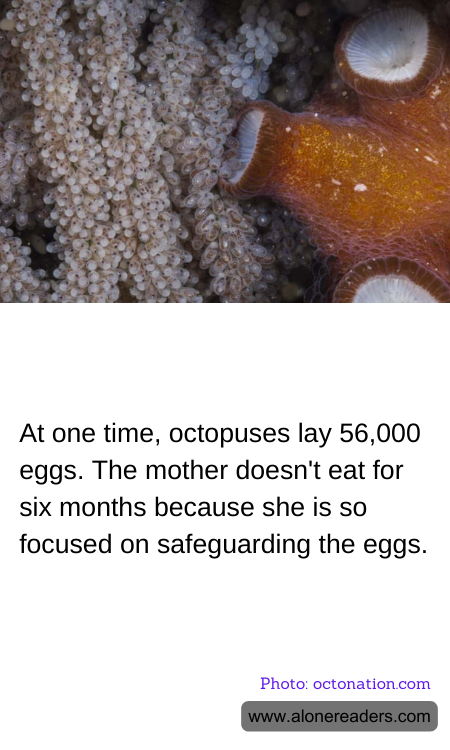
Octopuses are among the most intriguing creatures in the ocean, not only because of their intelligence and ability to camouflage but also due to their remarkable reproductive strategy. One particularly notable species in this regard is the octopus, which can lay up to 56,000 eggs in a single reproductive cycle. This astounding number highlights the prodigious potential these creatures have for offspring production, though the survival rate for the hatchlings is quite low due to numerous predatorial threats, ensuring that only a few make it to adulthood.
The commitment of an octopus to its future progeny is profound. Once the eggs are laid, the female octopus dedicates herself entirely to their care, a period that can extend up to six months. During this time, the mother octopus does not eat; her energy and efforts are wholly focused on protecting her eggs from predators and ensuring they receive enough oxygen by gently blowing currents of water over them. This self-sacrificial behavior underscores the harsh realities of the octopus's lifecycle, as the mother often dies shortly after the eggs hatch.
This remarkable breeding strategy of octopuses sheds light on the challenges they face in the wild. The low survival rate of the hatchlings and the eventual death of the maternal figure post-hatching emphasize the harshness of their ecological niche. However, these aspects also underline the resilience and adaptability of octopuses, pointing to the evolutionary pressures that have shaped their life histories. Octopuses, therefore, stand as a symbol of both the beauty and cruelty of nature, illustrating the complex interplay of biological imperatives and environmental constraints.
