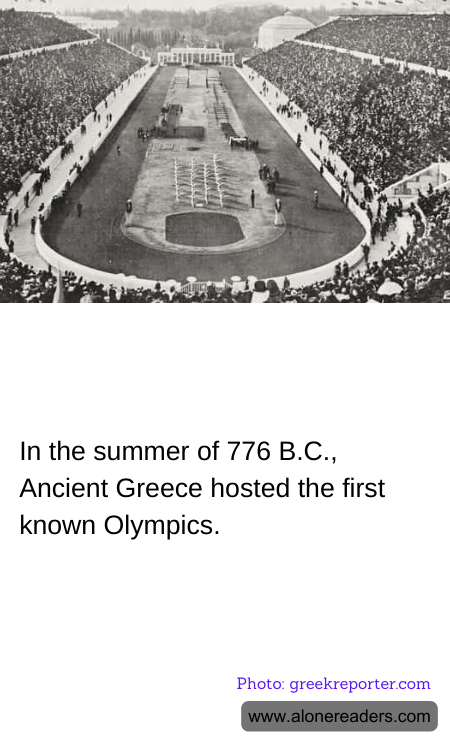
The first known Olympics in the summer of 776 B.C. marked a pivotal moment in Ancient Greek culture, laying the foundation for a tradition that would survive millennia and evolve into the global sporting event we celebrate today. Held in Olympia, a sanctuary site for the Greek gods, the event drew participants and spectators from various Greek city-states and territories. The origins of the Olympic Games are steeped in mythology and legend, attributed to various mythological figures such as Heracles, the son of Zeus. It is believed that the games were part of a religious festival to honor Zeus, the king of the Greek gods.
The initial Olympic Games were modest in scale, consisting of a single foot race, the 'stade' – a unit of measurement that also became the name of the race. Over time, additional events were added including wrestling, boxing, chariot racing, and the pentathlon, showcasing the physical prowess and competitive spirit of its participants. These games were held every four years, a period known as an Olympiad, and athletes competed for the prestige of victory rather than material rewards. Winners received a simple olive leaf crown but gained immense honor and were often celebrated by their home cities with statues or free meals for life.
Athletes had to adhere to strict rules of conduct and competition; any cheaters were fined, and the money was used to create statues of Zeus, serving as a permanent reminder of the consequences of dishonor. The Olympic truce, or ‘Ekecheiria’, was an integral aspect of the games, during which all conflict among the participating city-states ceased, allowing safe passage for participants and spectators. This truss underscores the significant role the Olympics played in fostering peace and unity amongst the Greeks.
As centuries went on, the influence of the Olympic Games grew, surviving the rise and fall of empires and undergoing multiple reprieves and revivals. The spirit and ideals of the ancient Olympics were reborn in the modern Olympic Games, first held in Athens in 1896. These ideals—namely, promoting peace, honor, and a celebration of human potential—are as relevant now as they were in ancient times, a testament to the enduring legacy of the Olympics. Today, the Olympic Games continue to bring nations together, transcending political, cultural, and economic boundaries, to celebrate athletic prowess and unity on the global stage.
