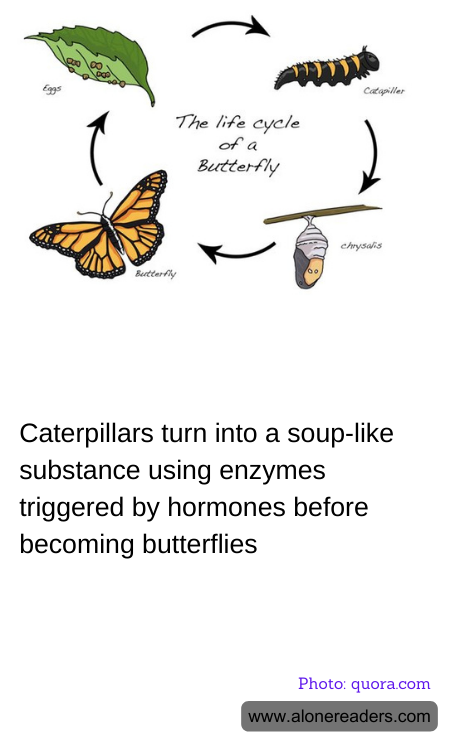
The transformation of caterpillars into butterflies is one of nature’s most fascinating processes, known as metamorphosis. This complex cycle is not only a stunning example of biological evolution at work but also showcases the intricate changes a living organism can undergo. At a certain point in their lifecycle, caterpillars stop eating, hang themselves upside down from a twig or leaf and spin themselves into a silky cocoon. Once encased in this pupa stage, something seemingly magical, yet scientifically explicable happens inside: the caterpillar literally digests itself, releasing enzymes that dissolve all of its tissues into a soupy mixture.
This ‘soup’ is not the end but rather the beginning of a new form. It contains all the necessary components required to develop into a fully formed butterfly. This process is triggered by hormones called ecdysone, which are crucial for initiating metamorphosis. The hormone causes the caterpillar’s body to produce enzymes that break down its body tissues, sparing only the imaginal discs—small groups of cells that survive the digestive process. These discs are incredibly important as they use the protein-rich soup around them to fuel the rapid growth and development into the butterfly’s new structures such as wings, antennae, and legs.
What's remarkable about this process is how the blueprint of a butterfly is encoded within the caterpillar from the beginning of its life, waiting for the right conditions to unfold. The transition from the soup-like substance to a complex organism is nothing short of miraculous. The old body is deconstructed and from this nutrient-rich liquid, cells differentiate, multiply, and organize into intricate patterns and structures, coordinating their efforts to form the adult butterfly.
The detailed molecular machinery involved in this process continues to be a subject of scientific study. Understanding how hormonal changes dictate and direct such a profound transformation in body structure could have implications beyond entomology, potentially informing areas of regenerative medicine and robotics.
Finally, after the metamorphosis process is complete, the newly formed butterfly must wait for its body to harden and fluids to be pumped into the wings before it can take its first flight. This incredible journey from a ground-dwelling caterpillar to an elegant butterfly highlights the adaptiveness and resilience of nature, shedding light on the complexities of life and evolution. The radical transformation of caterpillars into butterflies remains one of the most splendid and enigmatic biological phenomena observed in the animal kingdom.
