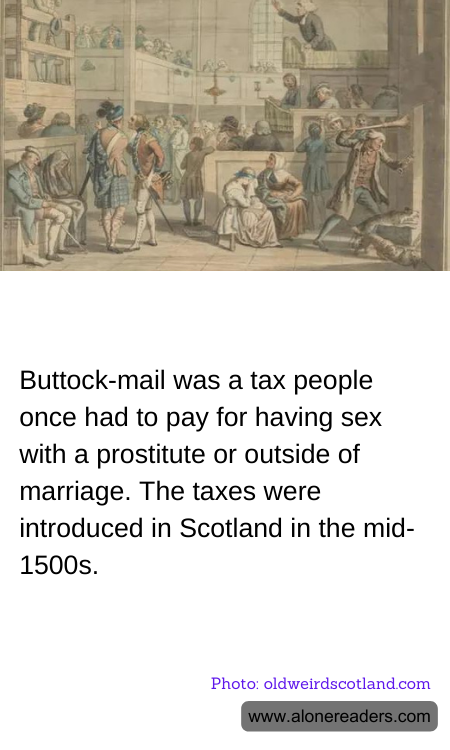
In the mid-16th century, Scotland introduced a highly controversial and unique tax that was infamously known as the "buttock-mail." This tax was levied on individuals who were caught engaging in sexual acts with prostitutes or participating in extramarital sexual relations. The term 'buttock-mail' itself painted a vivid picture of its purpose, with 'buttock' referring to the sexual nature of the tax and 'mail' deriving from an old term for rent or tax.
This tax was implemented during a time when church and state were deeply intertwined, and moral laws were enforced with strict rigor. The Scottish Reformation, a religious movement led by figures like John Knox, brought about strict moral supervision which the church sought to impose upon the population. The church courts, known as Kirk Sessions, were responsible for the enforcement of moral conduct among the locals, and the revenue from buttock-mail was a means to fund church activities while also serving as a deterrent against what was viewed as immoral behavior.
The implementation of such a tax reveals much about the societal attitudes of the period, particularly towards sexual morality and prostitution. Prostitution, while publicly condemned, was tacitably acknowledged and regulated through this fiscal penalty, indicating a complex relationship between societal values, morality, and economy. The buttock-mail was not merely a financial imposition but also a tool for social control, aiming to regulate behaviors that were considered unseemly or sinful.
Moreover, this tax sheds light on the state's involvement in personal affairs of the citizens, reflecting a governance approach where private moralities were subjected to public laws and regulations. This was not unique to Scotland as various forms of regulation concerning personal morality can be seen in different historical contexts globally.
The buttock-mail, though it may seem strange and even amusing from a modern perspective, serves as a historical marker that helps us understand the ways through-asexuality, societal norms, and law intertwined and how authorities used fiscal policies in an attempt to mold societal behaviors according to prevailing religious and moral standards. As with many historical phenomena, examining these peculiar aspects of the past provides insight into the complex ways societies manage private matters through public mechanisms.
