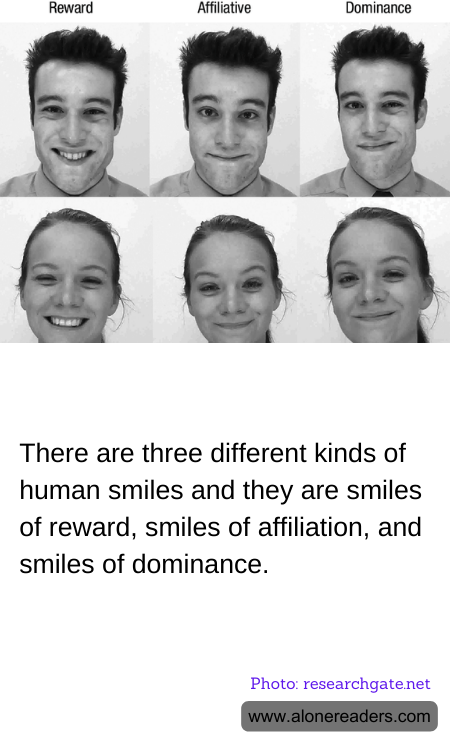
Smiles are one of the most basic and powerful forms of non-verbal communication among humans, capable of conveying myriad emotions and intentions. Interestingly, research in social psychology and behavioral studies categorizes human smiles into three distinct types: smiles of reward, smiles of affiliation, and smiles of dominance. Each type of smile serves a unique purpose and function in social interactions, affecting both the sender and the receiver differently.
Smiles of reward are perhaps the most familiar and genuine type of smile. They occur in response to a positive stimulus or a satisfying experience, such as receiving good news, achieving a goal, or enjoying interactions with others. These smiles express feelings of joy and pleasure, serving as a positive reinforcement that encourages similar future behaviors. By smiling in this way, individuals can strengthen relationships and promote a friendly environment.
Smiles of affiliation are used to create or maintain a social bond. They communicate a desire for connection or empathy with others, especially in new or uncertain situations. For instance, people might use an affiliating smile when meeting someone new or when trying to ease a tense situation. These smiles convey trustworthiness and acceptance, fostering cooperation and cohesion within groups.
Lastly, smiles of dominance are used as a social tool for asserting status or control, often in hierarchical or competitive contexts. Unlike the warmth of reward or affiliation smiles, dominance smiles might not involve the genuine pleasure or happiness. Instead, they might be smirk-like, showing a sense of superiority or an attempt to establish leadership. Such smiling can be common in professional environments where individuals strive to establish a place in the pecking order, or in social settings where one person wants to assert their dominance over others.
Understanding these different types of smiles and their contextual uses can greatly enhance our perception of social interactions and the subconscious motives behind them. It provides insight into how individuals navigate social hierarchies, build relationships, and create empathetic connections. Moreover, recognizing the kind of smile one is confronted with can help in responding appropriately, whether in personal relationships, professional environments, or casual encounters.
