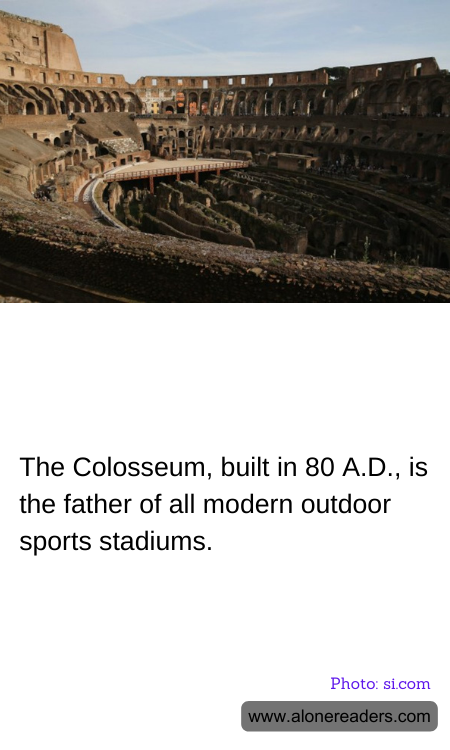
The Colosseum, originally known as the Flavian Amphitheatre, is an iconic symbol of the architectural prowess of ancient Rome. Completed in 80 AD under Emperor Titus, it holds the title as one of the earliest and largest structures of its kind, setting a blueprint for modern sports stadiums. Designed primarily for gladiatorial contests, animal hunts, and public spectacles such as mock sea battles, it could accommodate around 50,000 spectators. This immense capacity and its oval design echo through the ages in the structure of contemporary sports stadiums.
What makes the Colosseum the progenitor of modern stadiums is not merely its size or the variety of events it hosted, but its groundbreaking design and the technology involved in its construction. It featured a complex system of vaults and arches, supporting the weight of the massive spectator stands, something that modern stadiums still emulate in their designs. Furthermore, the hypogeum, a network of tunnels and cages beneath the arena floor, allowed for elaborate performances, showcasing engineering that was highly advanced for its time.
The Colosurrected primarily from stone and concrete, marking it as one of the earliest structures to use concrete for construction, a material that is prevalent in modern architecture. Its tiered seating areas, retractable roof (velarium), and the orchestrated entry and exit routes for crowds reflect a level of planning and understanding of crowd management that modern venues continue to rely on.
Modern stadiums, much like the Colosseum, serve as more than just venues for sporting events. They are integral parts of the urban landscape, contributing to the social, economic, and cultural dynamics of the cities they inhabit. From the design perspective, architects continue to draw inspiration from the Colosseum. The use of radial corridors for easy movement, extensive use of arches for structural stability, and the open-air nature of the venue are elements that have been incorporated into the design of current stadiums around the world.
In essence, the Colosseum is not just an architectural and cultural landmark, but a pioneering model in stadium design, influencing the construction and functionality of modern sports venues across the globe. Its historical and architectural significance makes it not only a relic of Roman entertainment and social life but also a tangible blueprint that has shaped the way current societies gather to watch and celebrate sports and entertainment.
