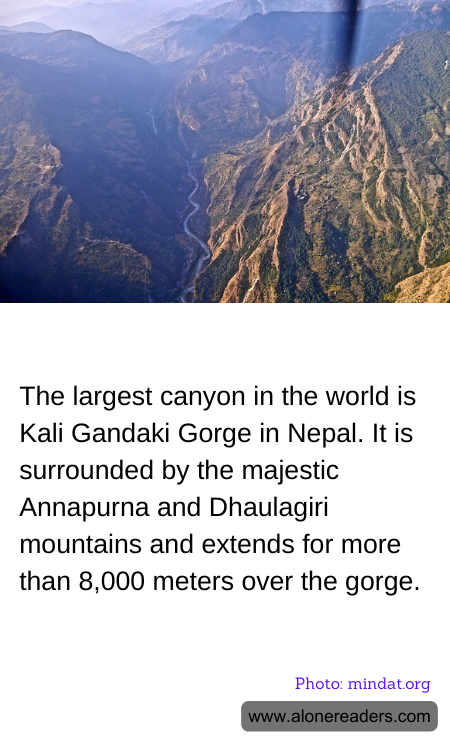
The Kali Gandaki Gorge, situated in Nepal, holds the title for the world’s deepest canyon. It is an awe-inspiring natural wonder that finds itself nestled between two of the Himalayas' giants: Mount Annapurna and Mount Dhaulagiri, both rising to over 8,000 meters. The gorge itself is shaped by the Kali Gandaki River which flows through it, carving a deep path that extends significantly below the peaks of these towering neighbors.
The significance of Kali Gandaki Gorge extends beyond its record-breaking depth. Historically and culturally, it is a vital part of local communities. For centuries, it has served as an important trade route between Tibet and Nepal, facilitating not only the exchange of goods like salt and barley but also the interactions between different cultures, religions, and communities. The flow of the river, combined with the treacherous terrain, makes the gorge both a natural marvel and a lifeline for the people of the region.
From a geological perspective, the gorge is a treasure trove offering insight into the tectonic activities that shaped the Himalayan region. Research suggests that the gorge might have formed due to the Indian plate thrusting beneath the Eurasian plate, a monumental geological phenomenon that continues to shape the landscape.
For trekkers and adventure enthusiasts, Kali Gandaki Gorge offers an unrivaled experience. The trek through the gorge is not just challenging but also rewarding, with panoramic views of snow-capped peaks, rugged trails, and a chance to experience the unique local culture. The journey is peppered with quaint villages where traditional lifestyles are preserved, and ancient temples and monasteries that are the keepers of the region's spiritual heritage.
Furthermore, the area is known for its fossils, particularly ammonite fossils which are believed to be about 140 million years old. Collectively known as "Shaligrams," these fossils hold religious significance in Hinduism and are often kept in shrines and homes as symbols of the god Vishnu.
The Kali Gandaki Gorge, with its profound depth and the rich experiences it offers, is a testament to nature's power and diversity. It stands as a symbol of natural beauty, historical significance, and cultural richness, making it a must-visit destination for anyone seeking to understand the vast and varied tapestry of our world.
