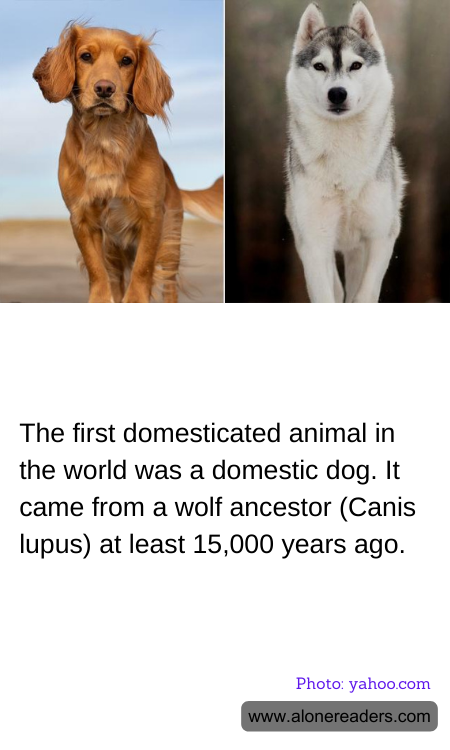
The domestication of dogs marks a fascinating and pivotal chapter in human history, highlighting our ancestors' transition from hunter-gatherer societies to more settled agrarian-based communities. Dating back at least 15,000 years, the first domesticated animal, the dog, emerged from its wild ancestor, the gray wolf (Canis lupus). This transformation is thought to have occurred in multiple locations around the world almost simultaneously, a testament to the parallel evolution and needs of human societies across the globe.
Archaeological and genetic evidence suggests that the process of domestication likely began when certain wolves started scavenging near human settlements. Over time, these wolves adapted to a new niche, gradually becoming more accustomed to human presence. The humans, in turn, found value in these early dogs, utilizing them for various purposes such as guarding, hunting, and companionship. This interdependent relationship facilitated a selective breeding process, whereby traits desirable for living alongside humans were favored, such as reduced aggression and a greater tolerance for human company.
This relationship significantly influenced the evolution of human societies, providing not just a companion but a working partner capable of hunting, herding, or guarding, thus enhancing human survival and facilitating geographic expansion. Over millennia, this partnership led to a wide variety of dog breeds, each tailored to perform specific tasks within different environments, reflecting the diverse needs and lifestyles of human societies.
The domestication of the dog is not just a story of animal adaptation but also a reflection of human cultural evolution, showcasing an early example of human ingenuity in manipulating natural processes. This milestone in domestication did not only lead to the emergence of a broad spectrum of dog breeds but also paved the way for the domestic rheinkinds, including sheep, goats, and cattle, which would also come to play crucial roles in human civilization. Thus, the domestic dog stands not merely as a companion and helper but as a symbol of human societal evolution and ingenuity.
