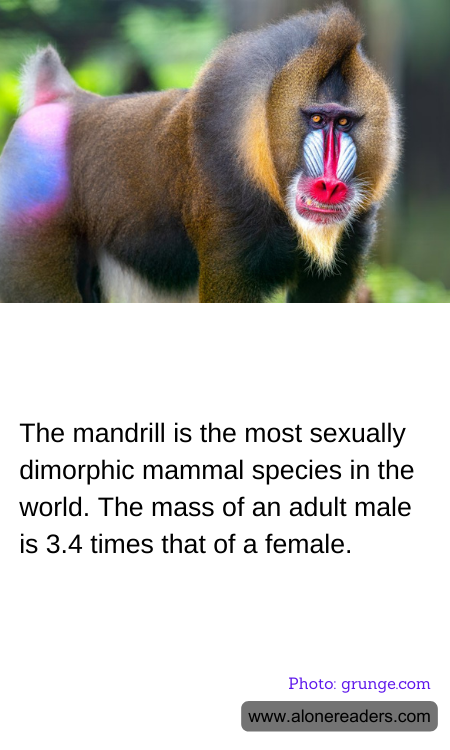
The mandrill (Mandrillus sphinx) is not only one of the most colorful primates in the world but also holds the distinction of being the most sexually dimorphic mammal. This means that male and female mandrills exhibit extremely different physical characteristics beyond their reproductive organs, particularly in terms of body mass and facial features. On average, an adult male mandrill is 3.4 times heavier than its female counterpart. Typically, males weigh between 19 to 37 kilograms, whereas females tip the scales at a much lighter 10 to 15 kilograms.
This significant difference in body size is just one aspect of their sexual dimorphism. Male mandrills are renowned for their vibrant colors and pronounced facial ridges. Their faces and rumps exhibit striking shades of red, blue, and yellow, which become brighter as the animals reach sexual maturity. These vivid colors are not just for display; they play a crucial role in communication and mating rituals, signaling the male's fitness and status within their social hierarchies. In contrast, females are less colorful, with more subdued hues on their faces and bodies, which might help in camouflage and protection from predators, considering their smaller size and vulnerability.
The ecological function of this dimorphism is deeply rooted in the mating strategies and social structure of mandrills. Living in dense rainforests in equatorial Africa, these primates are primarily terrestrial and move in large groups. The size and coloration of the males work as both an attraction mechanism for females and a deterrent for competing males. The bigger and more colorful the male, the more likely he is to win breeding rights, which has driven the dramatic differences in appearance between genders through sexual selection.
Additionally, the larger body size of males likely aids in competitive interactions, which are important given the highly hierarchical nature of mandrill societies. This size advantage allows dominant males to control access to resources, including food and mating opportunities, thereby influencing the reproductive success of individuals within the troop.
Understanding the sexual dimorphism in species like the mandrill not only highlights the complexity of evolutionary adaptations but also underscores the interplay between environment, social behavior, and physical characteristics in the animal kingdom.
