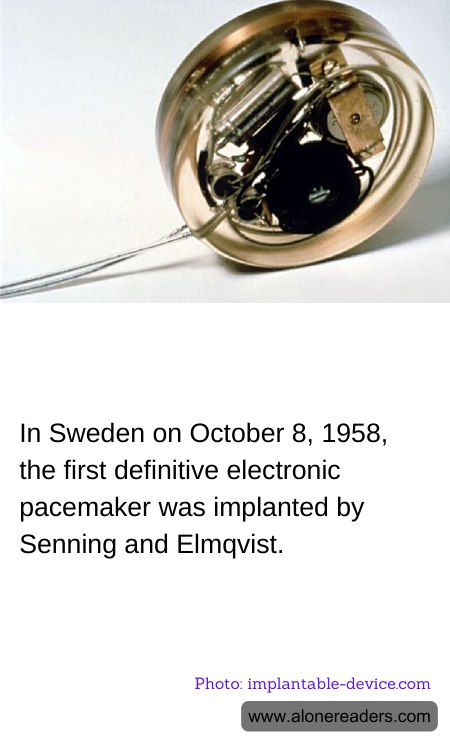
On October 8, 1958, a pivotal moment in medical technology occurred in Sweden that would drastically improve the quality of life for millions of people worldwide. Surgeon Åke Senning and engineer Rune Elmqvist successfully implanted the first fully functional electronic pacemaker into a patient, marking a significant advancement in cardiac care and biomedical engineering. This early device, although primitive by today’s standards, was a pioneering step towards the sophisticated pacemakers currently in use.
The invention of the electronic pacemaker addressed critical needs in patients with cardiac deficiencies, particularly those suffering from irregular heartbeats or arrhythmias. Before this innovation, options for treating severe heart rhythm disorders were highly limited and often ineffective. The device worked by sending regular electrical impulses to the heart, ensuring it beat at a normal rate and thus sustaining life even when the body’s natural pacemaking mechanisms failed.
The implantation procedure itself was groundbreaking and not without risks, given the medical and technological limitations of the time. The first model was somewhat cumbersome and required improvements over the years. However, its success opened up a new field of research and development that dramatically improved the functionality, size, and safety of pacemakers.
The impact of Senning and Elmqvist's work is immeasurable. Today’s pacemakers are highly sophisticated devices that can adapt to the patient's activity level and are often paired with defibrillators in one unit for patients at risk of sudden cardiac death. Moreover, the technology has branched into various forms of cardiac rhythm management devices, each tailored to specific patient needs.
The legacy of that day in 1958 thus remains a cornerstone in medical technology, showcasing a great leap forward in the pursuit of extending and enhancing human life. Modern pacemakers not only continue to save lives but are also a testament to how engineering and medicine can join forces to conquer some of the most challenging health issues. This breakthrough has assured countless patients a new lease on life, making it one of the most significant medical innovations of the 20th century.
