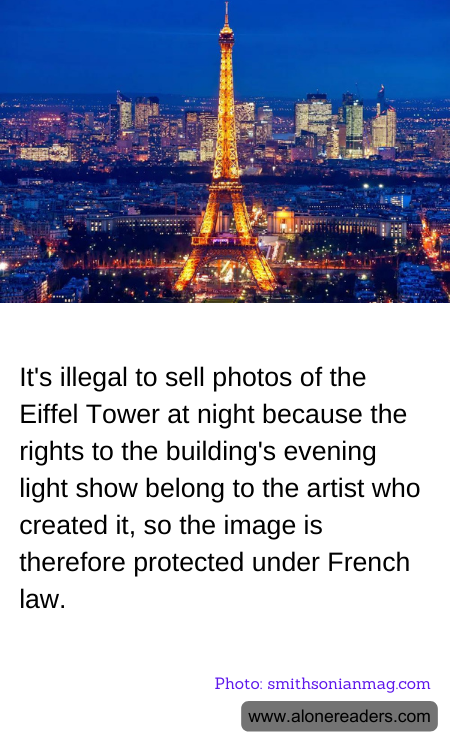
One of the most iconic landmarks in the world, the Eiffel Tower in Paris, France, not only captivates millions of tourists with its imposing structure by day but transforms into a mesmerizing light spectacle at night. However, while the daytime view of the Eiffel Tower can be freely photographed and shared, the rules change dramatically as the sun sets. It's a lesser-known fact that it is actually illegal to sell photographs of the Eiffel Tower's night-time display without permission.
The reason behind this intriguing legal situation lies in the copyright of the light show. Unlike the tower itself, which was completed in 1889 and has since entered the public domain, the artistic illumination, which was added in 1985, is copyrighted. The designer of the illumination, Pierre Bideau, has protected the visual display under French copyright laws. This artistic creation involves 20,000 light bulbs that illuminate the tower from within, creating a dazzling effect that has now become synonymous with Parisian nightscapes.
According to French law, reproducing images of the lighted Eiffel Tower requires prior authorization from the Société d’Exploitation de la Tour Eiffel (SETE). This organization manages the operations and maintenance of the tower. While it is perfectly legal for tourists and photographers to capture the illuminated landmark for personal use and enjoyment, commercial use of these images, such as in postcards, souvenirs, or stock photos for sale, requires a license from SETE. Failure to comply with these regulations can lead to legal action.
The intricacies of these copyright laws often surprise many, as the distinction between public domain and protected artistic copyright isn't widely familiar to the general public. While this might seem restrictive, it is part of broader efforts to preserve and respect artistic and intellectual property rights. As such, while visitors can still enjoy the breathtaking sight of the lit-up Eiffel Tower and take non-commercial photos, any desire to monetize such images needs careful consideration and compliance with French copyright laws. Thus, both during the day and at night, the Eiffell Tower remains not just a physical symbol of Paris, but a masterpiece guarded by both history and law.
