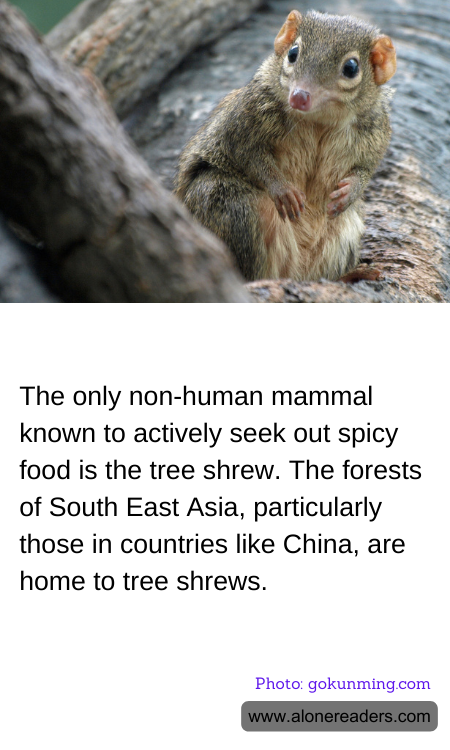
Tree shrews, fascinating creatures of South East Asian forests, stand out in the animal kingdom as unique connoisseurs of spicy food. Unlike most mammals who avoid capsaicin—the component that makes chili peppers hot—tree shrews actively seek it out. This unusual preference can be primarily observed in regions such as China, where these small mammals inhabit dense forests and have developed traits that align curiously with their fiery diet.
The biology behind their preference for spicy foods is as intriguing as it is unusual. Scientists believe that tree shrews evolved a mutation that makes them less sensitive to capsaicin. Where other mammals experience discomfort or even pain when eating spicy foods, tree shrews do not seem bothered. This mutation affects the TRPV1 receptor, which is responsible for the burning sensation that most species feel when they consume capsaicin. Consequently, tree shrews can consume large quantities of spicy berries and other naturally spicy plants without the deterrent effects experienced by other animals.
This unique dietary habit offers tree shrews certain advantages. Spicy foods in the wild are often less contested by other species, allowing tree shrews more abundant access to these resources without much competition. Moreover, the capsaicin-rich diet might provide health benefits, such as deterring parasites, which boosts their survival odds.
Further understanding of tree shrews' capsaicin tolerance could offer insights into the evolutionary benefits of their diet and how dietary preferences affect species survival and habitat choice. It also poses interesting questions about the dietary evolution of other species and what can be learned from the exceptional case of the tree shrew.
In summary, the tree shrew’s pursuit of spicy food not only highlights its unique place in the animal kingdom but also serves as a reminder of the complex interactions between an organism and its environment, driven by the intricate dance of evolution and adaptation. Their behavior challenges our understanding of dietary preferences in the animal world and opens up pathways for intriguing scientific research in evolutionary biology and ecology.
