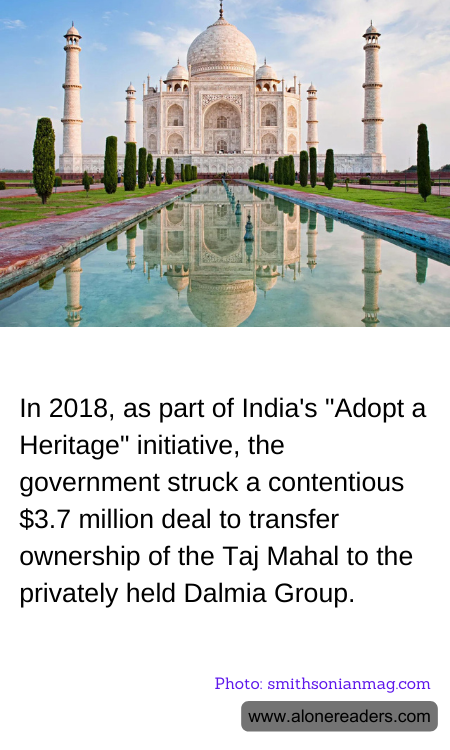
In 2018, India's "Adopt a Heritage" scheme stirred considerable controversy with its decision involving one of the world's most cherished monuments, the Taj Mahal. Under this project, the government does not transfer ownership but rather allows private entities, public sector companies, and individuals to adopt heritage sites and take up their maintenance to enhance tourism. The initiative led to a significant deal involving the Dalmia Group – a prominent Indian conglomerate, known chiefly for their work in cement and refractories – taking up the maintenance role of the iconic Taj Mahal in a partnership deal worth approximately $3.7 million.
This partnership was aimed at providing better amenities and a facelift for the more peripheral services linked to the mausoleum, including cleanliness and sanitation, the provision of drinking water, and easing access by improving pathways. However, the decision was met with widespread skepticism and outcry from various sectors of society. Critics argued that the heritage monument, recognized as a UNESCO World Heritage site and a symbol of India's rich history, should not be handed over to corporate entities, fearing that the move would lead to commercialization at the expense of preservation. The government and the Dalmia Group, on the other hand, assured that the core values and aesthetic of the Taj Mahal would not be compromised, emphasizing that the deal was strictly for upkeep and development of amenities.
The debates and discussions that the deal ignited touched upon broader issues regarding the preservation of cultural heritage and the role of the private sector in maintaining historical sites. While supporters of the deal argued that government bodies alone could not shoulder the burden of maintaining such monuments and that responsible corporate participation could provide much-needed funds and expertise, detractors remained concerned about potential neglect and inappropriate commercial exploitation.
Ultimately, the initiative has opened up new conversations about sustainable heritage management and the balance between conservation and development. The Taj Mahal, a symbol of love and a historical treasure, remains in the spotlight, not just for its architectural beauty, but also as a focal point for debates on how best to preserve such monuments for future generations. Moving forward, the success or failure of such public-private partnerships could set precedents impacting heritage conservation strategies both in India and globally.
