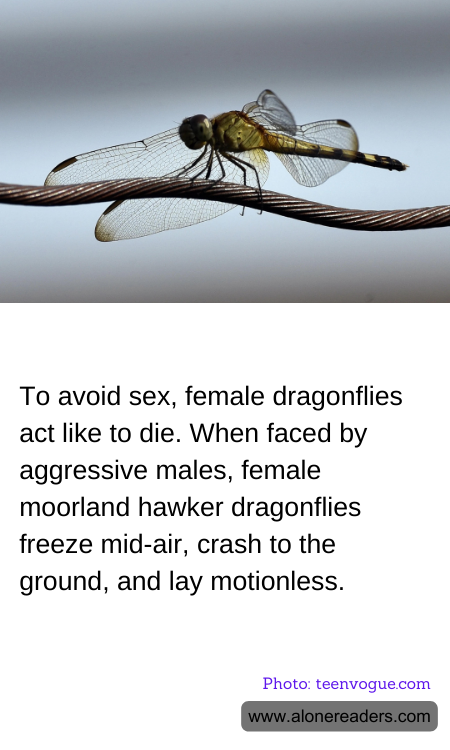
In the intricate dance of nature, survival tactics vary dramatically, but few are as dramatic as those of the female moorland hawker dragonfly. Observations from researchers reveal a rather remarkable behavior where these female dragonflies have developed a unique method to avoid unwanted male advances: they feign death. This extreme tactic comes into play during mating seasons when male dragonflies become particularly aggressive.
During these times, female moorland hawkers take dramatic measures. They suddenly freeze mid-air, plummet to the ground, and lay completely motionless, sometimes for considerable lengths of time. This behavior, termed thanatosis, is essentially playing dead to avoid interaction. The strategy is effective because male dragonflies will generally lose interest once a female appears deceased, moving on to seek a living mate. This tactic not only speaks to the pressures female dragonflies face during mating seasons but also highlights their ability to adapt behaviors for survival.
What drives this extreme behavior is the high stakes of dragonfly reproduction. For female dragonflies, mating can be a rigorous and hazardous event. Male dragonflies often exhibit aggressive behaviors during mating, which can include grasping females and holding them hostage to ensure copulation, sometimes leading to injury or death for the female. By feigning death, female moorland hawkers can avoid physical damage and potentially increase their lifespan and reproductive output.
This behavior underscores a broader narrative in the natural world where animals adopt extreme survival tactics. It also points to the complex dynamics of sexual selection and the often harrowing challenges females face in the animal kingdom. These survival tactics, while fascinating, are a stark reminder of the brutal realities of nature and the lengths to which creatures must go to survive and further their species. The feigned death of the female moorland hawker dragonfly is a powerful testament to the intersection of biology, behavior, and evolution.
