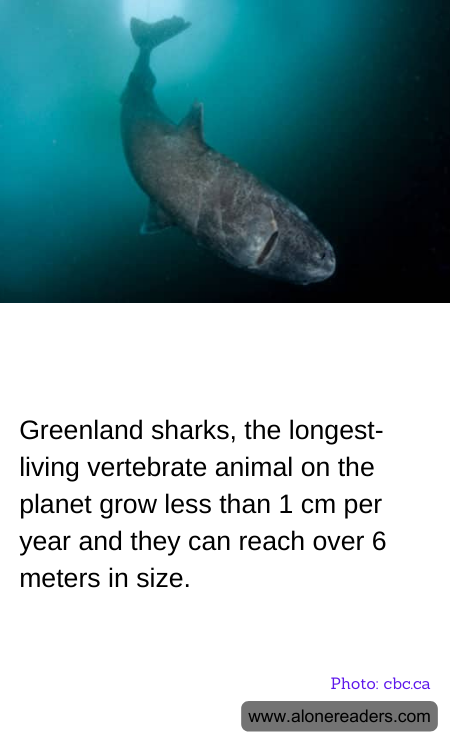
Greenland sharks, enigmatic giants of the deep, hold the title for the longest-living vertebrate on Earth. These sharks, often found in the cold, deep waters of the North Atlantic and Arctic Oceans, exhibit an exceptionally slow growth rate of less than 1 centimeter per year. This leisurely pace contributes to their remarkably long lifespan, with some individuals suspected to live for as long as 400 years.
The immense size of Greenland sharks, which can exceed 6 meters in length and weigh up to a ton, belies their slow-moving nature and relatively lethargic lifestyle. These characteristics are well-suited to the frigid environments they inhabit, where low temperatures and scarce food sources make a slow life strategy advantageous. Their diet is opportunistic, feeding on a variety of sea creatures including fish, seals, and even whale carcasses.
Studies on Greenland sharks are challenging due to their deep-sea habitat and the icy, remote regions they are found in. Much of what is known about them comes from research involving accidental catches or the painstaking efforts of scientists equipped to brave the harsh Arctic conditions. These sharks' bodies offer clues to their longevity, such as very low metabolic rates and high resistance to aging and disease.
Interestingly, it’s not just the physical features of Greenland sharks that intrigue scientists, but also their impact on ocean ecosystems and the tales embedded in their long-lived tissues. As they meander through the ocean depths, their bodies record chemical signals that offer insights into historical changes in the ocean environment over centuries.
The longevity of Greenland will continue to fascinate and challenge our understanding, providing a unique glimpse into the biological limits of vertebrates. As such, they are not just curiosities of the marine world but also key subjects in the study of aging, marine biology, and the health of ocean ecosystems.
