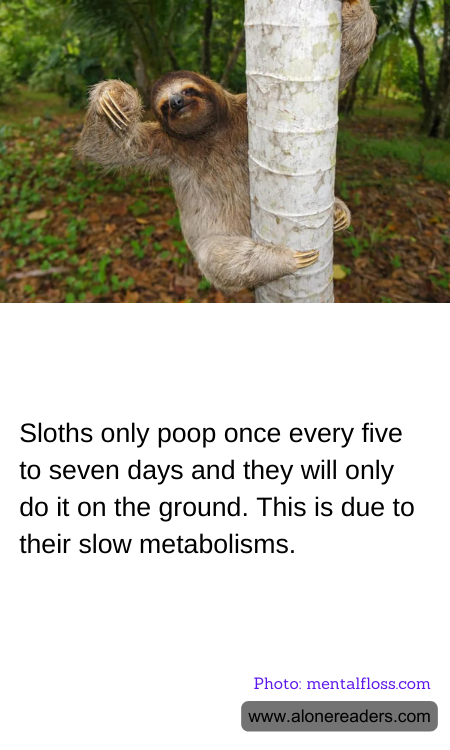
Sloths, those slow-moving, tree-dwelling mammals from the rainforests of Central and South America, possess a unique and somewhat peculiar trait when it comes to their bowel habits. Despite their leisurely existence high among the treetops, sloths make a rare and hazardous descent to the ground roughly once every week solely to defecate. This behavior raises questions about why such a seemingly vulnerable creature would expose itself to predators like jaguars and eagles, just for the sake of relieving itself.
The answer lies partly in their extremely slow metabolism. Sloths have one of the slowest metabolic rates among mammals, which means food passes through their system at a snail's pace. They digest their leafy diet so slowly that it can take up to a month to process their meals fully. Consequently, they only need to defecate once every five to seven days. Their low-calorie diet of leaves provides minimal energy, which meshes well with their low-energy lifestyle but means any movement or activity must be deliberate and minimized.
When the time comes to eliminate, a sloth will climb down from its arboreal refuge and defecate at the base of a tree. One theory for this risky behavior suggests that it is related to communication, particularly during the mating season, as the feces can help convey information about reproductive status through scent. Another hypothesis is that defecating at the base of the tree helps to foster a symbiotic relationship with certain species of moths and beetles that breed in the dung. These insects, in turn, help fertilize the trees, which are the primary habitat and food source for the sloths.
This perilous descent is a significant event in the sloth’s otherwise sedentary life, accounting for up to 8% of its energy use. The arduous journey is slow and often perilous, making sloths vulnerable to predation. Despite these risks, this unusual behavior highlights the intricate balance of ecosystems and the surprising ways in which species adapt to their environments. In the case of the sloth, it is a breathtaking reminder of the interconnectedness of life and the lengths to which organisms will go to survive and thrive in their natural habitats.
