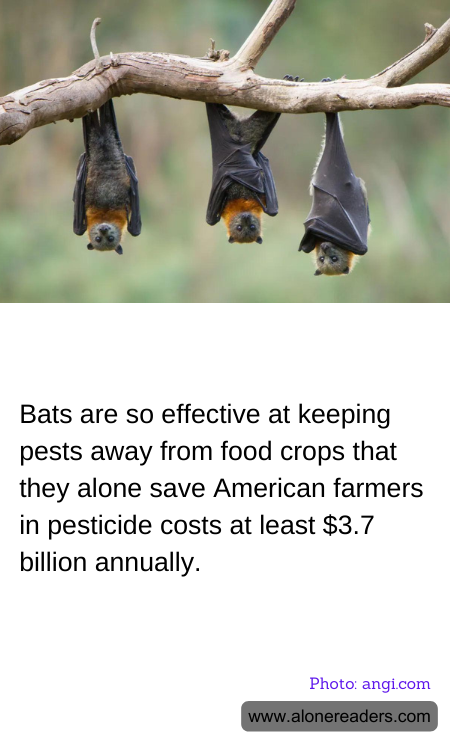
Bats play a crucial role in agriculture as natural pest controllers, significantly benefitting the economy and the environment. In the United States alone, bats contribute enormously by saving American farmers up to $3.7 billion every year in pesticide costs. This reduction in pesticide use not only cuts costs for farmers but also leads to healthier crops and a more sustainable environment.
Bats are effective in pest management because of their diet preferences; they consume vast amounts of insects, including many common pests that damage crops. A single bat can eat between 500 to 1,000 mosquitoes and other insect pests in just one hour, making them an invaluable natural resource for reducing the need for chemical pesticides. This not only helps protect crops but also conserves the biodiversity of the farming area, which can be negatively impacted by the heavy use of chemical pest control.
Moreover, bats contribute to the agricultural ecosystem by pollinating plants and spreading seeds. Many plants rely on bats for pollination, including some types of mangoes, bananas, and agaves, which are essential to both local economies and global food supplies. The role of bats extends beyond just pest control to being integral parts of ecological success and agricultural productivity.
However, despite their importance, bat populations are in decline due to habitat loss, climate change, disease, and wind turbines. This decline poses a significant risk not only to biodiversity but also to agriculture. Efforts to conserve bat populations are critical and include protecting habitats, regulating pesticide use, and conducting further research to better understand bat ecosystems.
Educational initiatives that inform farmers and the general public about the benefits of bats can help in conserving and supporting these vital creatures. By understanding the environmental and economic benefits of bats, communities can implement more bat-friendly practices, such as building bat houses and preserving natural habitats, which in turn supports healthier ecosystems and sustainable agricultural practices. Thus, the protection and promotion of bat populations are essential not just for the natural environment but for the economic well-being of the agriculture industry as well.
