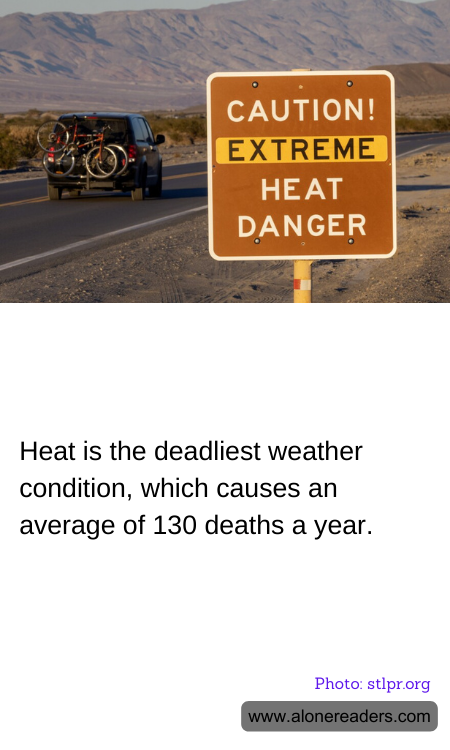
Heat is often underestimated as a deadly weather phenomenon, despite being the leading cause of weather-related deaths in several regions. On average, heat causes around 130 deaths annually in the United States alone, surpassing the fatalities caused by other severe weather events such as hurricanes, tornadoes, and floods. This silent killer primarily affects vulnerable populations like the elderly, the homeless, and those without access to air conditioning.
The insidious nature of heatwaves contributes to their deadly impact. Unlike the immediate destruction visible from tornadoes or hurricanes, the perilous effects of high temperatures accumulate over time. Dehydration, heat exhaustion, and the more severe heat stroke are progressive conditions that can fatally impair the body's ability to regulate its temperature. Symptoms might start as mild discomfort and fatigue, escalating without adequate intervention to potentially devastating outcomes.
Moreover, the risk is compounded in urban areas due to the urban heat island effect, where buildings, roads, and other infrastructure absorb and re-emit the sun’s heat more than natural landscapes such as forests and water bodies. This makes urban regions warmer, exacerbating the health risks associated with heat. For instance, during the night, when relief from the heat in rural areas might be palpable, city temperatures can remain markedly higher, thereby providing little respite from the relentless heat, keeping air conditioning running longer, and increasing energy consumption, which in turn contributes to even higher urban temperatures.
Climate change is also playing a significant role in increasing the frequency, duration, and intensity of heatwaves. This pattern not only means more hot days but also nights that are warmer than before, reducing the body's ability to recover from the daytime heat.
To counteract the dangers of extreme heat, several strategies can be employed. Awareness and community outreach programs are vital, especially in providing information and assistance to those at greatest risk. Local governments can improve city planning with more green spaces to mitigate urban heat islands. Moreover, emergency weather response plans that include opening cooling centers can be life-saving during heat waves.
Addressing the public health risks associated with extreme heat conditions involves a combination of proper warning systems, community preparedness, and proactive strategies to reduce these risks to protect human health. The increasing trend of heat-related deaths underscores the need for health awareness campaigns and stronger infrastructure resilience to cope with the changing climate landscape and its myriad challenges.
