Understanding the intricate web of genetics can lead to fascinating discoveries about family relationships and genetics especially in the case of half-siblings and twin cousins. Generally, siblings raised in the same family share about 50% of their DNA, derived from the common genetic contributions of both parents. In contrast, half-siblings are children who share only one biological parent, whether it be the mother or father, making them genetically linked through 25% of their DNA.
This genetic sharing impacts not only the familial bonds but also the genetic traits and potential health issues passed down through families. These genetic variations can manifest in diverse physical, health, or behavioral traits even in siblings raised under the same environmental conditions.
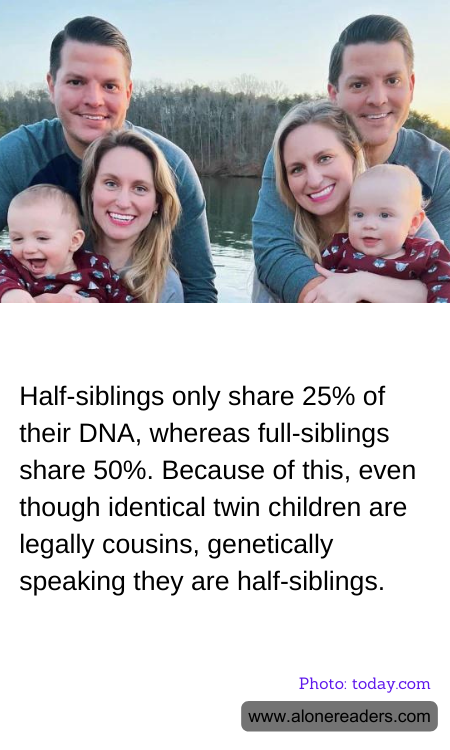
A particularly intriguing scenario is the case of "twin cousins." This situation occurs when two siblings from one family each have a set of twins with their respective partners. Legally, the children are considered cousins as they each have different parents. However, genetically, these twin cousins share a resemblance that parallels that of half-siblings rather than typical cousins. This occurs because each set of parents contributes significantly to the genetic makeup of the children, making the genetic overlap between twin cousins closer to that of half-siblings, around 25%, as opposed to the usual 12.5% shared among typical cousins.
These twin cousin relationships underscore the complexity of genetic inheritance and illustrate how family genetics can yield surprising relationships, blurring the lines between the conventional definitions of cousins and half-siblings. This closer genetic relationship can often result in twin cousins exhibiting more familial resemblances to one another than ordinary cousins might, both in appearance and sometimes in health traits.
Such cases emphasize the beauty and complexity of human genetics and how modern families can redefine traditional boundaries, creating unique familial bonds and connections that enrich our understanding of both genetics and family relationships. This blending of families and genes can have profound implications for genetic research, particularly in understanding how genes express themselves in successive generations and influence family members in varying ways.
