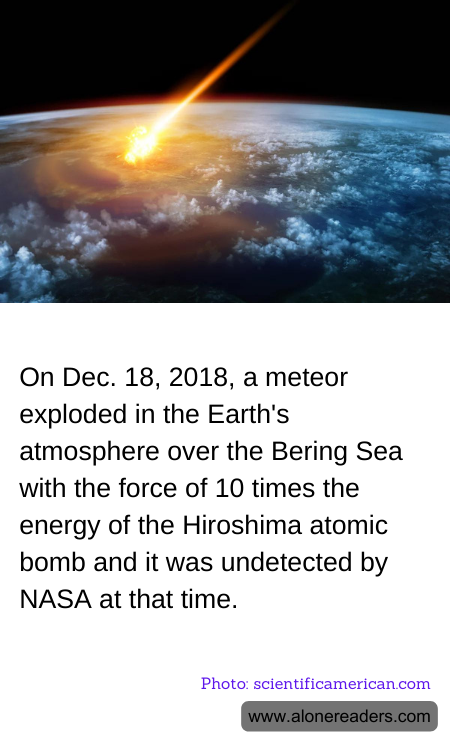
On December 18, 2018, the Earth experienced a dramatic yet largely unnoticed extraterrestrial event when a meteor exploded over the Bering Sea. This meteor was no small visitor; its explosion released an estimated energy equivalent to 10 times that of the Hiroshima atomic bomb, approximately 173 kilotons. Remarkably, despite this immense release of energy, the event managed to slip under the radar at the time of occurrence and was not detected by NASA or other major space monitoring agencies.
The meteor itself fell in a relatively remote area, which partly explains why it went unnoticed. The Bering Sea, positioned between Russia and Alaska, is not densely populated and its airspace is less trafficked compared to other areas. However, the explosion was later confirmed by military satellites which detected the blast, and subsequent investigations utilized data from these satellites to better understand the event.
While it is disconcerting that such a powerful explosion occurred undetected, this incident sheds light on the challenges faced in monitoring near-Earth objects (NEOs). Earth is often visited by space debris, including asteroids and meteors, but only a fraction are detected before impact. The vastness of space, combined with the speed and often small size of these objects, makes tracking and prediction extremely tough. Most of the NEOs that pass close to Earth are not threatening, but the Bering Sea meteor explosion is a potent reminder of our vulnerability.
The implications of such an event are substantial, underscoring the urgent need for improved surveillance and defense strategies against potential asteroid impacts. Current efforts by space organizations around the world, including NASA’s Planetary Defense Coordination Office, focus on identifying potentially hazardous asteroids and developing contingency plans for deflection or evacuation should a dangerous object head towards Earth.
In conclusion, while the 2018 Bering Sea meteor explosion went undetected initially, it became a crucial reference point for understanding and improving Earth’s defense mechanisms against celestial threats. The near-miss serves as a call to enhance our global capability to detect and respond to similar future events, ensuring that rather than relying on luck, we are prepared to actively safeguard our planet.
