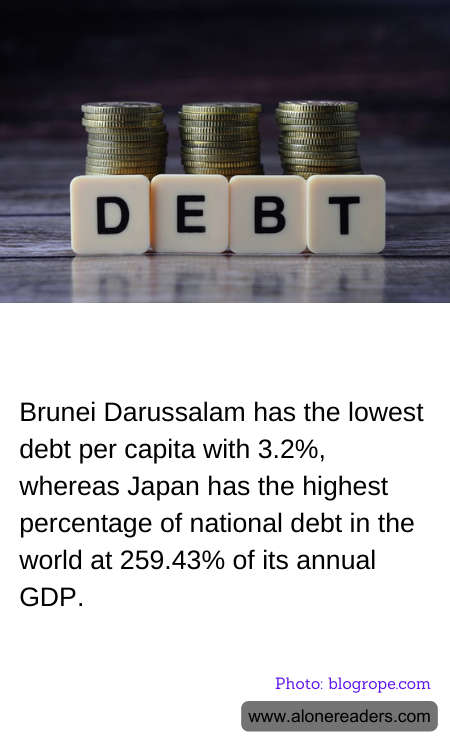
Brunei Darussalam and Japan present interesting case studies in the global economic landscape due to their contrasting national debt figures. Brunei, a small but wealthy country located on the island of Borneo, boasts the lowest debt per capita at a mere 3.2% of its GDP. This low debt ratio can be attributed to its vast reserves of oil and gas, which account for a significant portion of the nation's revenue. The government of Brunei has strategically used its wealth to build a robust economy with minimal reliance on external borrowing, resulting in very low debt levels. This financial strategy has afforded the country an unusual degree of economic stability and independence compared to others.
In stark contrast, Japan, despite being one of the world’s largest and most advanced economies, holds the record for the highest national debt, which stands at an alarming 259.43% of its GDP. This immense debt load is the result of decades of budget deficits driven by efforts to stimulate growth through heavy government spending on infrastructure, public services, and, more recently, to combat the economic effects of an aging population. Despite these challenges, Japan's debt is primarily held domestically, which shields the economy from the kinds of risks associated with high levels of foreign debt.
The divergent scenarios of Brunei and Japan illustrate the vastly different approaches and outcomes of national debt management. While Brunei's economic reliance on a single resource poses risks should global oil prices fall, its prudent financial management has so far safeguarded against significant debt. Conversely, Japan’s situation prompts debates on sustainable fiscal policies and the balancing act between stimulating economic growth and managing national debt levels effectively. Both countries, hence, provide valuable insights into the complexities of economic strategies and their long-term implications on national stability and resilience. As global economic conditions continue to evolve, the experiences of Brunei and Japan will likely serve as important reference points for discussions on fiscal policy and economic management in both developed and emerging economies.
