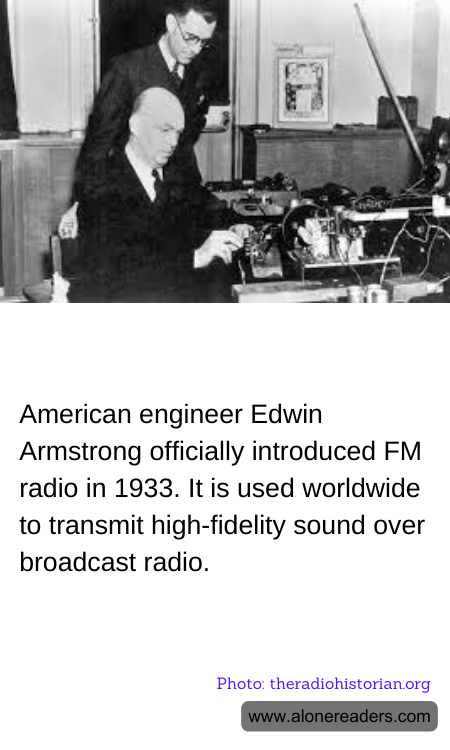
In 1933, American engineer Edwin Armstrong introduced Frequency Modulation (FM) radio, revolutionizing the way sound was broadcast over the airwaves. FM radio technology dramatically improved the quality and clarity of radio broadcasts by encoding a sound signal as variations in the frequency of the carrier wave, rather than the amplitude, which was the method used by the earlier Amplitude Modulation (AM) broadcasts. This key innovation effectively reduced static and interference that commonly plagued AM radio, making FM the preferred choice for transmitting music and high-fidelity sound.
The advent of FM radio offered a superior listening experience, gaining immense popularity among audiences who desired clearer sound without the disruptions commonly associated with AM transmissions, especially during poor weather conditions. FM broadcasting's capacity to carry stereo signals further enhanced its appeal, providing a richer audio experience by delivering two separate channels of sound, thereby simulating the spatial effects of live music.
Throughout the 20th century and into the 21ist century, FM radio became a dominant force in the broadcast industry worldwide, facilitating a broad spectrum of radio formats and content, from music and talk shows to news and public affairs. It also played a crucial role in the music industry, influencing popular culture and music distribution. Radio stations adopted specific formats to cater to different audiences, such as rock, pop, classical, and jazz, thereby shaping listener preferences and trends.
Despite the rise of digital technologies and streaming services, FM radio remains a vital medium for reaching broad and diverse audiences, particularly in less developed areas where access to the internet is limited. Additionally, in emergency situations, FM radio proves to be an essential tool for disseminating information quickly and efficiently, underscoring its continued relevance in the modern media landscape. The legacy of Edwin Armstrong's FM radio endures, reminding us of a pivotal moment in technological history that transformed how the world experiences audio entertainment.
