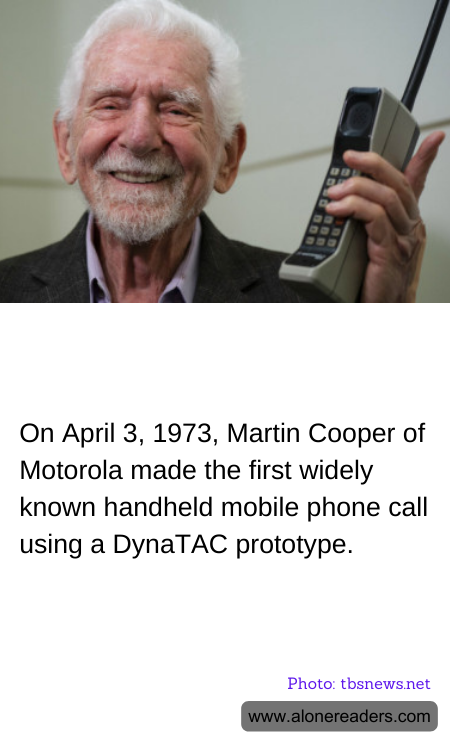
On April 3, 1973, a revolutionary technology debuted that would vastly reshape communication, business, and social interaction globally. Martin Cooper, an engineer at Motorola, marked his place in history by making the first public call from a handheld mobile phone. This inaugural call, made using a DynaTAC prototype on the bustling streets of New York City, was not just a demonstration of technological prowess but a glimpse into a deeply interconnected future.
The phone Cooper used, the DynaTAC, was a sizable device by today's standards, often affectionately referred to as "the brick." It weighed almost 2.5 pounds and took 10 hours to recharge, which might seem impractical now but was revolutionary at the time. This call was made to Dr. Joel S. Engel of Bell Labs, Motorola’s chief rival in the telecommunications race, highlighting the intense competition and drive for innovation that characterized the era.
This pivotal moment represented the culmination of years of research and development in the field of mobile communication technology. The concept of cellular technology itself was introduced by Bell Labs in the 1940s, but it was Motorola under Cooper’s leadership that successfully demonstrated the first practical use of the technology in handheld form. Motorola’s demonstration ignited the evolution of mobile phones, leading from bulky and impractical designs to the sleek, multifunctional devices we rely on today.
The implications of Cooper’s call have been profound, influencing not just the field of telecommunications but also impacting social behavior and business operations worldwide. The level of connectivity achieved through mobile phone technology has fostered global partnerships and collaborations that were previously unimaginable, and it has played a significant role in the globalization of business.
Moreover, the evolution from that original mobile call to today’s smartphones illustrates continuous innovation. Modern smartphones are equipped with capabilities far beyond just making calls, encompassing internet connectivity, cameras, and an endless array of applications, fundamentally altering how we interact with the world around us.
Thus, Cooper's first mobile call on that April day in 1973 did not merely showcase a new gadget; it introduced the first building block of a globally connected community, paving the way for the digital society we live in today. As we continue to innovate and evolve, the core of this technology serves as a reminder of how far we have come and how deeply integrated connectivity has become in our daily lives.
