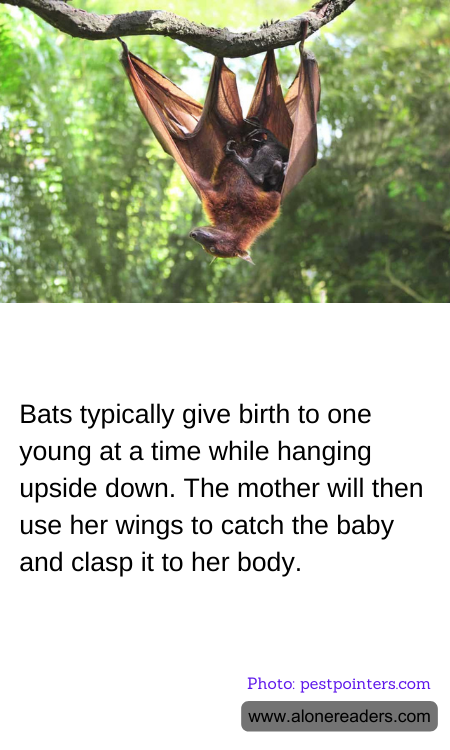
Bats are fascinating creatures, not only because of their ability to fly and use echolocation but also because of their unique reproductive behaviors. Unlike most mammals, which give birth while in a horizontal or even standing position, female bats have adapted to deliver their offspring while hanging upside down. This might sound precarious, but bats have developed remarkable methods to ensure the safety and well-being of their young during this critical time.
When a female bat is ready to give birth, she finds a secluded spot within a cave, tree, or other sheltered area where she can hang undisticked. Labor and delivery are carried out in this inverted position, which is natural for bats and offers them the comfort and security they need. As the baby bat, or pup, emerges, the mother bat positions herself to catch the newborn with her wings. This critical maneuver prevents the newborn from falling and provides immediate warmth and protection.
After catching the pup, the mother bat uses her strong, flexible wings and sharp claws to clasp the baby to her body. This close physical contact keeps the newborn bat warm and safe from potential predators. The pup clings to its mother's fur with its tiny claws, which are strong enough to hold onto her as she moves and flies.
The mother bat's nurturing doesn't end with the physical act of giving birth. Bats are excellent mothers. They will continue to care for their young until they are old enough to fend for themselves. During the early weeks of its life, the baby bat feeds on its mother's milk and gains the necessary strength to eventually learn how to fly and hunt for food. This period of parental care is crucial for the survival of the young bat, as it provides them with the skills and strength needed to thrive in their natural habitat.
The intimate and ingenious birthing process of bats showcases their unique adaptations to their nocturnal lifestyle and aerial environment. It also highlights the evolutionary marvels of nature, showing how species can evolve very specialized reproductive strategies to increase their offspring's survival chances in often harsh and competitive ecosystems. Such wonders continue to capture the curiosity and admiration of scientists and nature enthusiasts alike.
