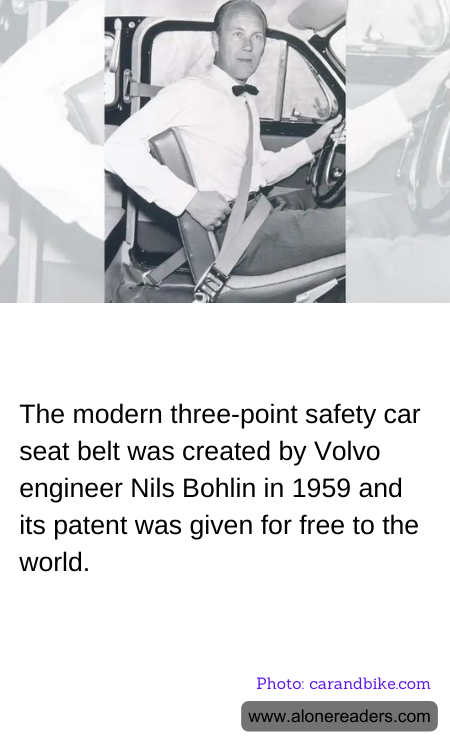
The modern three-point seat belt, a standard in vehicle safety, traces its origin to a revolutionary design by Nils Bohlin, a Swedish engineer at Volvo. Bohlin's creation in 1959 marked a significant leap in automotive safety, addressing the high number of fatalities and injuries associated with car accidents. Before his invention, cars typically utilized two-point waist restraints, which did little to protect the upper body. Bohlin, who had previously worked in the Swedish aviation industry, applied his understanding of the human body's movement during a collision to develop a restraint that provided better protection.
His design was simple yet effective: a continuous loop of fabric that extended over the chest and across the lap, which could be buckled at the hip, away from vital organs. This configuration helped to distribute forces across the body’s sturdier parts—namely, the chest and pelvis—thereby reducing the strain on any single point, such as the abdomen or neck. The genius of this design not only increased safety but also provided comfort, which encouraged more motorists to wear seat belts consistently.
Recognizing the significant impact this invention could have on global auto safety, Volvo made a landmark decision that underscored its commitment to safety over profit. The company decided not to patent the three-point seat belt. Instead, it declared the invention to be openly available to anyone who chose to use it, effectively donating the design to the public domain. This altruistic move allowed other manufacturers to incorporate Bohlin’s design into their vehicles without legal or financial barriers, which led to widespread adoption.
Today, it is nearly impossible to imagine a car without a three-point seat belt. This safety feature has been credited with saving millions of lives worldwide and is a standard requirement in virtually all passenger vehicles. Its ubiquity and critical importance in daily vehicle safety underscore the profound effect that Bohlin's invention and Volvo’s generous decision have had on modern society. The innovation sparked further research and development in automotive safety technologies, continuing to shape how safety is approached in vehicle design and manufacturing.
