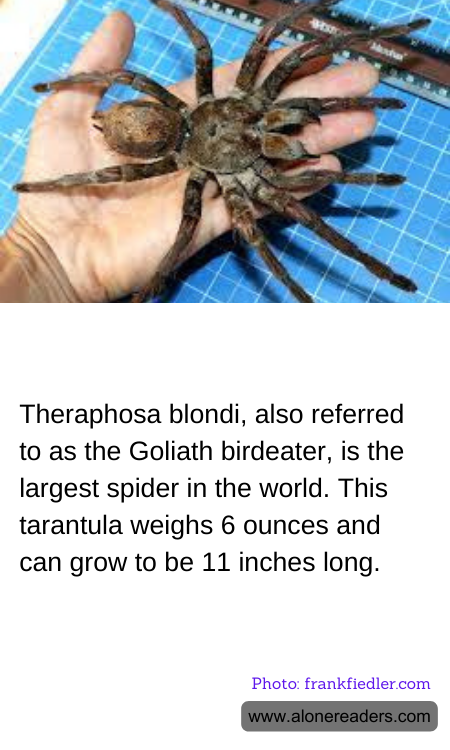
Theraphosa blondi, commonly known as the Goliath birdeater, holds the title for being the largest spider in the world by mass. Found predominantly in the rainforests of northern South America, particularly in countries like Venezuela, Guyana, Suriname, and northern Brazil, this spider has sparked both fascination and fear due to its sheer size and appearance. Despite its intimidating name, the Goliath birdeater’s diet predominantly consists of insects and occasionally small vertebrates such as frogs, lizards, and rodents. Birds are not typically a part of its diet, contrary to what its name might suggest.
The Goliath birdeater's body can reach up to 6 ounces in weight, with a leg span that can stretch up to 11 inches, approximately the size of a dinner plate. This tarantula's formidable size is complemented by its hairy body and large fangs, which are capable of delivering a venomous bite. The venom, while not lethal to humans, can cause significant pain, swelling, and discomfort, somewhat similar to a wasp sting. Some individuals, however, might experience more severe allergic reactions.
Apart from its venom, the Goliash birdeater employs a unique defensive mechanism. When threatened, it uses its hind legs to rub against its abdomen, releasing hairs that are barbed and irritating to the eyes and mucous membranes of potential predators. This reaction is an effective deterrent against most threats in its natural habitat.
Despite its fearsome capabilities, Theraphosa blondi is a relatively solitary and nocturnal spider, spending most of the daylight hours in burrows. These burrows can be quite extensive, providing shelter not just from predators but also from the extreme elements of its environment. Breeding season presents about the only time these spiders seek out company, with the female laying up to 200 eggs after mating.
In recent years, the Goliath birdeater has also become a popular yet controversial pet for arachnid enthusiasts around the world. Those who keep them as pets note their relatively docile nature compared to other tarantula species, although their care requires a significant commitment to recreating appropriate environmental conditions and managing the spider's potentially aggressive behaviors during handling.
The existence and habits of the Goliath birdeater continue to intrigue and educate those interested in the diversity of life on Earth, reminding us of the complexity and the wonder hidden within the world's rainforests. It serves as a living example of the delicate balance within these ecosystems, and the constant interplay between prey and predator dynamics.
