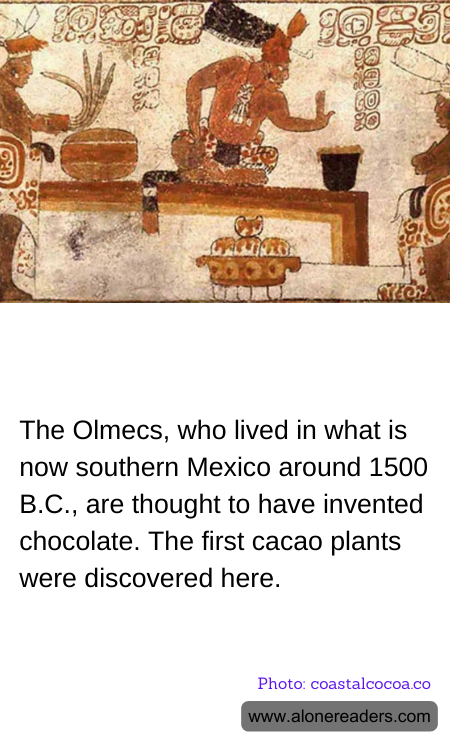
Chocolate, one of the world's favorite treats, has a rich history that dates back over 3,500 years. The journey of chocolate begins with the ancient Olmecs of southern Mexico, who are believed to be the first humans to discover the culinary potential of cacao. Around 1500 B.C., this civilization discovered how to harvest and process the cacao plant, which is native to the tropics of the Americas.
The Olmecs learned that the fruit of the cacao tree contained seeds that could be processed into a potent concoction. To do this, they fermented, roasted, and ground cacao seeds into a paste, which could then be mixed with water, along with various seasonings, to create a chocolate drink. This drink was far from the sweet chocolate we know today; it was a bitter beverage and was more likely consumed for its energizing and restorative properties, possibly even as a ceremonial drink. Consumed by elites in the society, this chocolate drink played an important role in various ceremonies and rituals.
The knowledge and techniques for processing cacao were passed from the Olmecs to successive Mesoamerican cultures, including the Maya and the Aztecs. The Maya, who flourished in the region from about 250 A.D. to 900 A.D., revered cacao so much that they even worshipped a god of cacao and used cacao beans as currency. Following the Maya, the Aztecs continued to value chocolate highly, though, due to the unsuitability of their territory for growing cacao, they had to trade for it, which further symbolized its luxury status.
When the Spanish conquistadors arrived in the New World in the early 16th century, they were introduced to the native chocolate drink, which by then had been perfected into a rich, spicy, and frothy beverage known as 'xocolatl.' Fascinated by this concoction, the Spanish brought it back to Europe, where sugar and honey were added to counteract its natural bitterness. Over time, chocolate evolved into the sweetened forms popular in Europe and around the globe, a process enabled by industrialization, which made mass production possible.
Today, chocolate is loved worldwide and is available in an endless variety of forms, from candy bars to baking ingredients and gourmet concoctions. It’s remarkable to think that all of this started with the ancient Olmecs, who first unlocked the potential of the cacao seeds. Their legacy survives not only in the joy that chocolate brings to millions but also in the continuing importance of cacao in the cultures of the descendants of the Olmecs and other indigenous peoples of the Americas.
