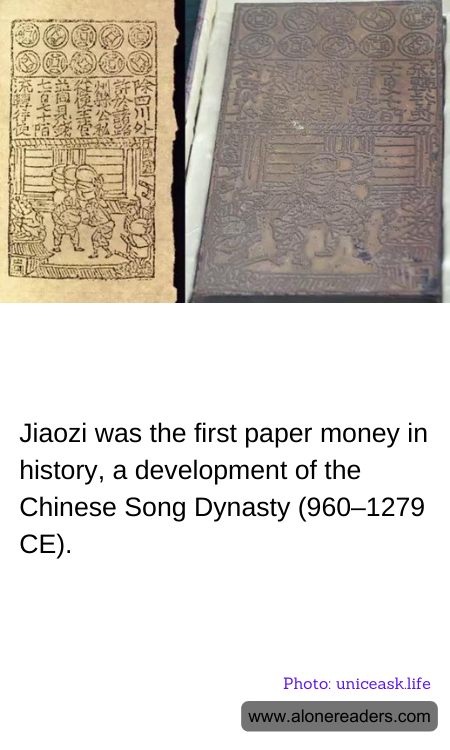
Jiaozi, the pioneering form of paper money, emerged during the Song Dynasty in China, marking a transformative moment in the history of economics and commerce. The Song Dynasty, spanning from 960 to 1279 CE, was a period characterized by remarkable advancements in technology, culture, and government. Among these innovations, the introduction of jiaozie was particularly noteworthy as it represented the initial shift from commodity money, such as metals, to a form of money that was lighter, more manageable, and conducive to larger-scale transactions.
The inception of jiaozi can be attributed to the growing economic complexities of the Song society. As trade expanded, the limitations of traditional metal coins became apparent; they were cumbersome to transport in large quantities and prone to wear and corrosion. These challenges necessitated a more practical medium of exchange. Thus, merchants in the bustling city of Chengdu began issuing these paper notes as a reliable and convenient substitute for metal coins around the early 11th century. These notes, backed by the trust in the issuing merchant, could be redeemed for coinage and were initially used among traders and government officials.
Recognizing the potential of jiaozi to streamline tax collection and reduce the costs of transporting metal money across the vast empire, the Song government officially sanctioned the use of paper money. The success of jiaozi led to the establishment of state-run factories for the production of paper money and laid down protocols for its issuance and circulation. Government endorsement not only stabilized the value of jiaozi but also helped in curbing counterfeiting, as severe penalties were imposed on those caught manipulating the new system.
The introduction of jiaozi marked a profound change in the monetary landscape, setting the stage for subsequent innovations in paper currency around the world. It facilitated expanded trade, both domestically and with international partners, by making transactions more efficient. Moreover, this early form of paper money paved the way for future financial instruments and monetary policies, influencing economies across the globe.
In reflection, the emergence of jiaozi during the Song Dynasty was not just a financial evolution, but also a catalyst for broader economic and societal advancement. It underscores how innovations in currency can reflect and support the dynamic nature of human societies, adapting to meet the ever-changing needs of economic activity and exchange.
