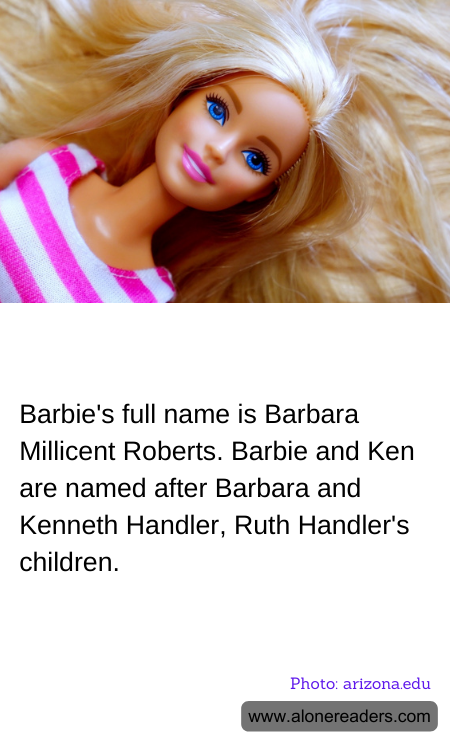
Barbie, an iconic figure adored by millions over the generations, was brought into the world of toys by Ruth Handler, co-founder of Mattel, Inc., in 1959. Her full name, Barbara Millicent Roberts, reflects a persona that has become much more than just a doll. The inspiration behind the names Barbie and her counterpart Ken stems intriguingly from familial ties—specifically, Ruth Handler's own children, Barbara and Kenneth Handler.
The inception of Barbie was revolutionary in how it proposed the idea of a doll with adult features as opposed to the baby and toddler dolls that dominated the market at the time. By introducing Barbie, Handler didn’t just create a toy but launched a new platform for girls to imagine the future through role-play and storytelling, enabling the doll to have various careers and adventures. She crafted Barbie as a reflection of modern womanhood, capable of being independent and ambitious, which was a significant shift from the typical representations of women at that period.
Ken, introduced two years after Barbie in 1961, served as her counterpart, named after Ruth Handler’s son Kenneth. While not as celebrated as Barbie, Ken has had his share of various roles, from a beach bum to a business executive, offering a male figure that could accompany Barbie in her myriad of life scenarios. Together, these figures have not only been toys but also cultural statements, reflecting and contributing to changing societal norms about gender and professional roles.
Over the years, Barbie has undergone numerous transformations, significantly impacting cultural and social perceptions of body image and beauty standards. Barbie has wielded considerable influence in the toy industry but has also faced her share of criticisms, particularly regarding body image and unrealistic standards for young girls. In response, Mattel has introduced versions of Barbie that include multiple skin tones, body types, and careers, ensuring that Barbie evolves with changing societal values and continues to inspire a broader audience.
Overall, the story of Barbie and Ken, rooted in the real-life family of their creator, extends beyond their plastic forms. They represent a dynamic narrative about innovation, adaptation, and the power of representation in toys. Barbie, in her many roles and forms, has become a touchstone in society’s ongoing dialogue about gender roles and the empowerment of young children, especially girls, reflecting an enduring legacy that started with a simple familial inspiration.
