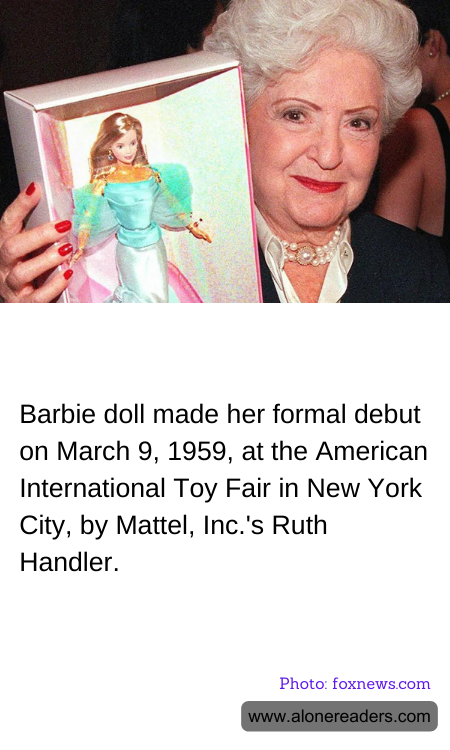
Barbie, the iconic doll that has become a symbol of American culture, was first introduced to the world on March 9, 1959, at the American International Toy Fair held in New of York City. The brainchild of Ruth Handler, co-founder of Mattel, Inc., Barbie was inspired by a German doll called Bild Lilli, which Handler discovered while on a trip to Europe. Barbie's introduction was revolutionary; she was one of the first dolls to feature an adult body, making her stand apart from the infant and toddler dolls that were prevalent at the time.
Ruth Handler observed her daughter Barbara playing with paper dolls and imagining them in adult roles. This observation sparked the idea to create a doll that could project an aspirational role of adult womanhood, offering children a way to imagine their futures and explore various lifestyles and careers. Named after Handler’s daughter, Barbie Millicent Roberts from the fictional town of Willows, Wisconsin, came equipped with a distinct backstory and a focus on career-oriented playsets that have since included everything from astronaut to president.
Barbie's debut was met with skepticism from industry professionals who doubted its market potential, but the doll quickly grew in popularity, becoming a staple in toy collections around the world. Over the years, she has evolved both in design and function, reflecting changes in society and the aspirations of the children who play with her. From her beginnings as a teenage fashion model, Barbie has been reinvented multiple times, adopting more than 200 careers over the decades.
Barbie's influence extends beyond just child's play. She has been both criticized and praised by various sectors of society. Critics argue that her unrealistic body proportions (which would be impossible to achieve and unhealthy in a real human) set unattainable beauty standards for girls. Others have applauded her for providing young girls with a toy that embodies independence and the possibility for self-determination, breaking away from traditional roles imposed by society.
Mattel, Inc. has responded to criticisms by diversifying Barbie’s appearance over time, encompassing a variety of body types, races, ethnicities, and cultures. This shift toward inclusivity is part of Barbie's enduring appeal. By constantly adapting to the social and cultural climate, Barbie has managed to remain relevant in the competitive toy industry for more than six decades. With her wide array of outfits, accessories, and playsets, Barbie continues to inspire the imaginations of children around the world, encouraging them to dream big and explore a world of possibilities.
