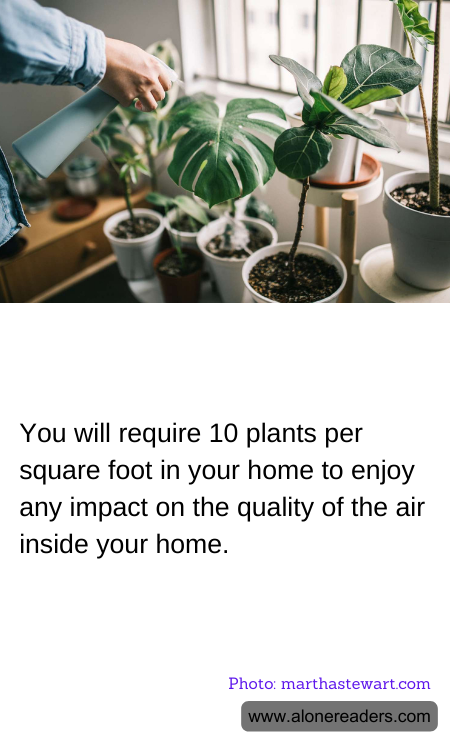
Houseplants not only add aesthetic appeal to your home but are also renowned for their ability to improve indoor air quality. Common houseplants such as spider plants, Boston ferns, and snake plants are often celebrated for their ability to filter out common volatile organic compounds (VOCs) like benzene, formaldehyde, and trichloroethylene from the air.
NASA’s Clean Air Study, often cited in discussions of indoor air quality, suggested that having at least one plant per 100 square feet of home or office space can help to purify the air. However, a widespread misconception is that you need as many as 10 plants per square foot to truly benefit from their air-purifying effects. This figure is highly exaggerated and impractical in typical home environments.
Realistically, the number of plants required to significantly impact air quality depends on several factors including the size of the space, the type of plants, and environmental conditions such as light, humidity, and air flow. For a typical home environment, spacing out a few well-chosen, air-purifying plants in various rooms can contribute to reducing pollutants. Plants like English ivy, peace lilies, and bamboo palms are particularly effective at filtering out airborne toxins.
In addition to their air-purifying capabilities, plants can also contribute to psychological well-being, reducing stress and enhancing mood. The psychological benefits, combined with their aesthetic value, make a strong case for integrating plants into indoor spaces, regardless of the exact number.
To optimize the air quality improvements from houseplants, consider their placement, care routines, and ensure that you’re using an appropriate number of plants for your space. A reasonable approach would be to start with a few plants and increase the number as necessary based on the specific conditions and size of your indoor environment. Engaging with local gardeners or plant shops can also provide insights specific to your locality and indoor settings, helping you create a greener, healthier living space.
