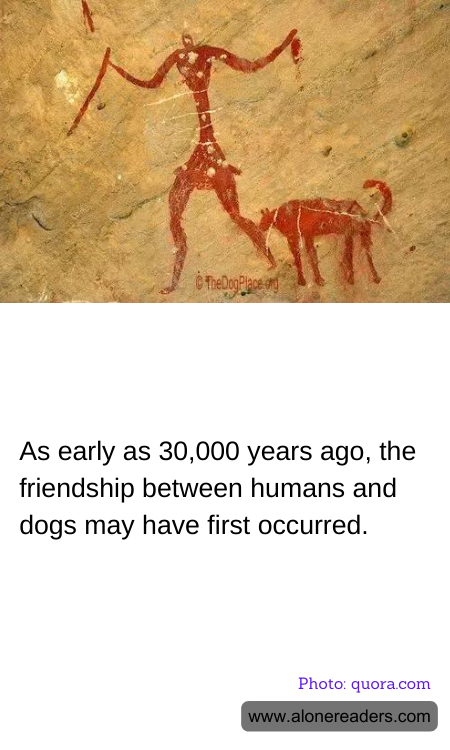
The bond between humans and dogs is not just a product of modern society but has origins tracing back to nearly 30,000 years ago. This relationship likely began when some of our hunter-gatherer ancestors came into contact with wolves. At first, these encounters were probably not of friendship but of mutual benefit. Early humans would have quickly realized the advantages of having wolves nearby, such as warning of approaching dangers and helping to corner prey during a hunt.
Over time, these wild wolves may have gradually become domesticated as both wolves and humans realized they could achieve more together than apart. The process was likely driven by the natural selection of less aggressive wolves who were more tolerant of human presence. These wolves evolved into more docile creatures who not only tolerated but sought the company and the leftovers of humans. In return, humans would have found the evolving dogs to be useful in hunting, guarding, and companionship.
The evolution of this relationship can be observed in the archaeological record, where the remains of dogs have been found buried alongside humans, suggesting a bond of mutual respect and perhaps even affection. Early dog fossils show signs of having been cared for by humans, including healed bones and signs of diseases like arthritis, suggesting that these animals held a valued place in human society.
Moreover, some genetic studies suggest that dogs were domesticated from wolves at least twice in different parts of the world. This process of domestication might have occurred independently in both Europe and Asia, indicating that the human-canine partnership is a universal phenomenon, transcending individual cultures and suggesting a deep-rooted biological and social imperative.
The transformative journey from wild wolves to domesticated dogs highlights a significant evolutionary success story. Dogs have developed the ability to understand human gestures and commands, and they have developed into a spectrum of breeds each suited to various aspects of human needs, including companionship, security, work, and therapy. This partnership has thrived so profoundly that today, dogs are often considered not just pets but part of the family in many cultures around the world.
The relationship between humans and dogs, started so many millennia ago, shows the incredible inter-species bond that can exist, fundamentally shaping the evolutionary path of the dogs and enriching human lives through companionship and service.
