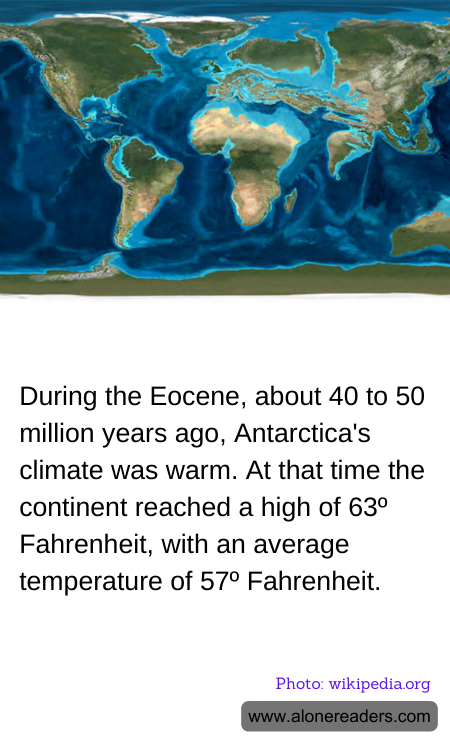
In sharp contrast to its current frozen state, Antarctica during the Eocene epoch, roughly 40 to 50 million years ago, experienced a warm climate with some scientists documenting summertime temperatures reaching as high as 63º Fahrenheit and averaging around 57º Fahrenheit. This unusual warmth allowed the growth of lush forests, which were home to a diverse array of plant and animal life, vastly different from the stark, ice-covered desert we see today.
This period of warmth in Antarctica's climatic history was due to a combination of factors—including higher levels of atmospheric carbon dioxide and a configuration of continental positions that facilitated warmer ocean currents flowing towards the polar regions. The evidence of this warmer climate comes from various geological and paleontological indicators, such as fossilized plant remains and data from marine sediments.
During the Eocene, Antarctica was not isolated at the southern polar region as it is today. Instead, it was still connected to South America and Australia, forming part of a supercontinent known as Gondwana. The breakup of Gondwana, which began during the Jurassic period, was yet to be completed, and the Drake Passage between Antarctica and South America had not fully opened. This allowed the warm currents of the Tethys Ocean to flow southwards, moderating temperatures on the continent.
The fossil records from this era reveal fascinating details about life during Eocene Antarctica. Pollen grains, leaf impressions, and wood from ancient forests suggest that the land was covered with lush temperate forests, dominated by trees such as beeches and conifers. This rich vegetation supported a diverse ecosystem, including a variety of insects, reptiles, and early mammals.
This Eocene warmth provides a stark contrast to the present-day climate of Antarctica, which is significantly influenced by its geographic isolation and the circumpolar Antarctic Circumpolar Current, which keeps warm ocean waters at bay, preserving the continent’s frigid status. Studying this period helps scientists understand more about climate dynamics and the potential impacts of contemporary climate change, particularly as modern-day global temperatures continue to rise. Insights gleaned from ancient climates like that of Eocene Antarctica are invaluable in predicting how current ecosystems might evolve in response to our changing climate.
