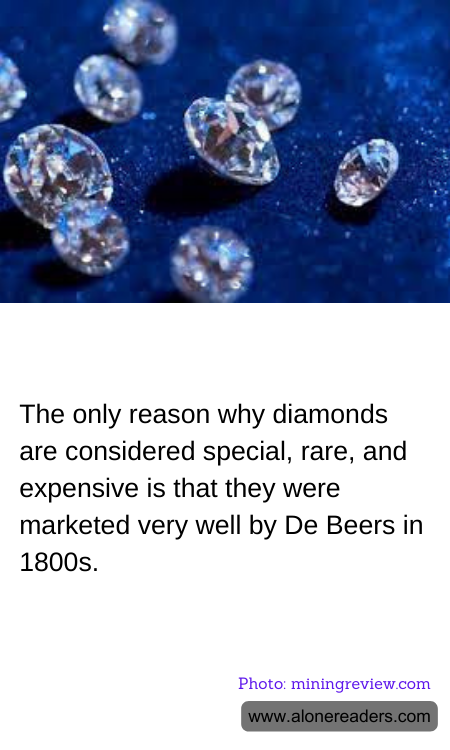
Diamonds are renowned for their dazzling allure and are often viewed as symbols of wealth, love, and status. However, what many people don't realize is that the rarity and value attributed to diamonds are largely a product of marketing, particularly by the diamond firm De Beers in the late 1800s. Before the 1800s, diamonds were indeed rare but not widely known outside of some aristocratic circles in India and Europe. It wasn't until the vast diamond mines in South Africa were discovered, and De Beers took control of these operations, that diamonds became both more plentiful and paradoxically, perceived as more valuable.
The transformation in the public's perception of diamonds can be largely attributed to the aggressive marketing strategies employed by De Beers throughout the 20th century. The company effectively created a diamond market from scratch by promoting diamonds as the only acceptable stone for engagement rings, a now deep-rooted tradition in many cultures. One of the most effective campaigns was the "A Diamond is Forever" slogan created in 1947, which solidified the gem’s association with eternal love and marriage. This notion artfully suggested that diamonds were not just items of luxury, but sentimental heirlooms, thus discouraging people from selling them which kept the stones price high and market controlled.
De Beers also skillfully managed the market supply of diamonds to maintain high prices. They stockpiled diamonds and restricted their release into the market, creating an artificial scarcity that inflated prices. Such control over both the market and the narrative around diamonds led to the public seeing them as rare and invaluable despite being, by geological standards, less rare than truly scarce gems like rubies and emeralds.
Moreover, the perceived value of diamonds is also a testament to human psychology and social constructs. Diamonds don't have much intrinsic value; their worth is not tied to their effectiveness in industry or their utility in any form other than adornment. Yet, because of relentless marketing and tightly controlled availability, diamonds have been imbued with cultural significance that dictates their high appraisal in both economic and emotional terms.
In conclusion, while diamonds do possess inherent qualities that make them desirable—such as their brilliance, durability, and the skill required to cut them into precious gems—their status as the premier gemstone is largely the result of manufactured perception and market manipulation. This serves as a fascinating example of how value can be shaped and sustained through storytelling and strategic marketing.
