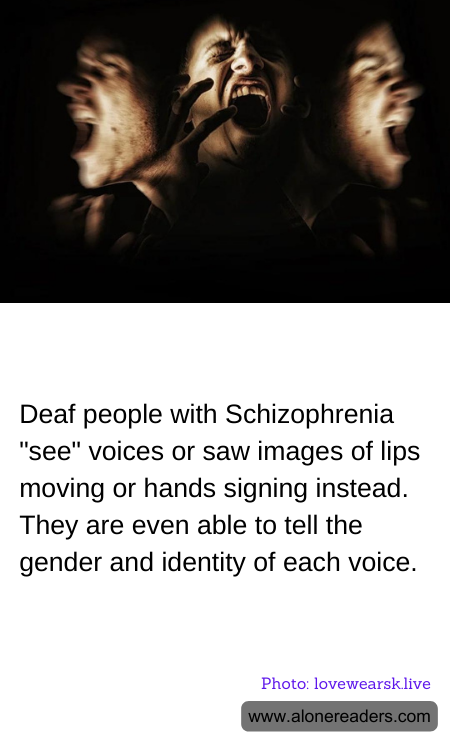
For most people, schizophrenia usually manifests in auditory hallucinations, predominantly hearing voices. However, for individuals in the deaf community who suffer from schizophrenia, these experiences can manifest quite differently. Instead of "hearing" voices, many report visual hallucinations which may include seeing disembodied lips mouthing words or hands gesturing in sign language. These visual experiences can be as vivid and intricate as auditory hallucinations, deeply influencing the sensory perception of those affected.
Research indicates that these visual hallucinations, often involving seeing lips moving or hands signing, suggest that the brain adapts its response to hallucinations based on the individual's primary mode of communication. This phenomenon highlights the brain's flexible approach to creating sensory experiences that are understandable and meaningful to the person, even under the influence of schizophrenia. Deaf individuals with schizophrenia might perceive these hallucinations as distinct personalities. They can sometimes discern the gender and identity of the "voices" similar to how hearing individuals might distinguish different auditory voices.
This aspect of schizophrenia among the deaf is not just a clinical curiosity but points to broader implications in terms of diagnosis, treatment, and support. Traditional diagnostic techniques and treatments are often based on auditory symptoms. Consequently, there's a need for adapted strategies that consider the unique experiences of deaf individuals with schizophrenia. Mental health professionals working with this population need to be aware of these differences to provide accurate diagnoses and effective treatments.
Moreover, this underscores the importance of tailored mental health resources and communication aids for the deaf community. Such adaptations will ensure that all individuals, regardless of hearing ability, receive the support and intervention they need. Understanding and integrating the unique sensory experiences of deaf individuals with schizophrenia into treatment plans can greatly enhance their quality of life and lead to better health outcomes. It emphasizes, once more, the importance of personalized medicine and the need to consider individual differences in the experience and treatment of mental health disorders.
