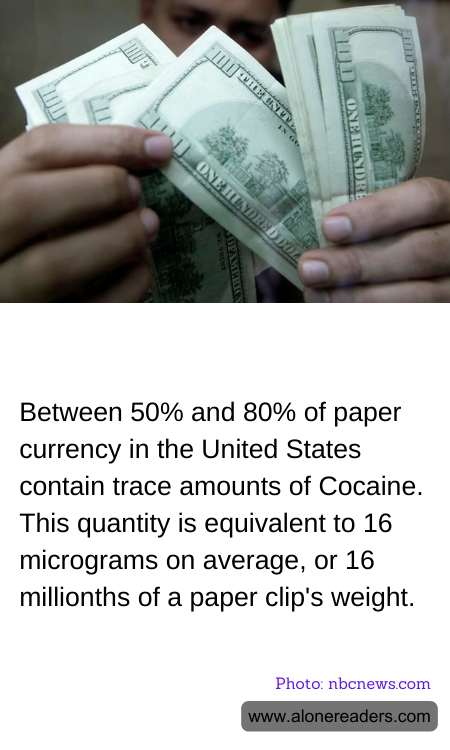
The presence of cocaine on U.S. dollar bills is a fascinating, if somewhat unsettling, phenomenon that illustrates the wide reach of drug circulation. Despite the shock value of such statistics, trace amounts of cocaine doesn’t imply that all holders of such currency use or even come into direct contact with the drug. These traces often reflect cross-contamination, which can occur at multiple points in the journey of a dollar bill.
Money changes hands frequently and is rarely washed or cleaned, so bills can pick up substances from various environments. They may become contaminated during drug transactions or by being rolled up and used to snort cocaine, a common method of cocaine use. Subsequently, these contaminated bills pass through banks, ATMs, stores, and countless hands, spreading the microscopic particles.
The trace levels found on currency are incredibly minute. To put the average of 16 micrograms into perspective, it's only 16 millionths of a gram, far less than what would be required to produce any narcotic effect if accidentally transferred during handling. For comparison, a standard paper clip weighs about 1 gram, which highlights just how small this amount really is.
This widespread contamination mostly highlights issues in drug circulation rather than public health, as these trace amounts are generally harmless and incapable of affecting individuals who come into contact what the contaminated bills. However, the very existence of cocaine in such a high percentage of currency can serve as an indicator for law enforcement and policy makers about the prevalence of drug use and the effectiveness of current drug control policies. It underscores the challenge of curbing drug circulation within complex, interconnected societies where millions of dollars move around the country daily.
Financial and public institutions have taken several measures aimed at decreasing the spread of contaminants on paper currency. Yet, the practicalities of regularly cleaning or disinfecting currency make such measures difficult to implement broadly. As such, while the idea of cocaine-contaminated money might seem alarming, it is a small reflection of broader societal issues rather than a direct health concern. This information rather serves as a compelling point of curiosity and a marker of the hidden journeys our money takes.
