Air travel has long been lauded for its speed and efficiency, connecting distant parts of the world within hours. However, this convenience comes at a significant environmental and human health cost due to toxic pollutants in airplane exhaust. While the safety of air travel has markedly improved, leading to fewer fatal crashes, the insidious impact of its emissions has become a growing concern.
The combustion of aviation fuel in jet engines releases a variety of pollutants, including carbon dioxide, nitrogen oxides, sulfur oxides, and particulate matter, all of which contribute to air quality degradation and climate change. These emissions are particularly potent because they are released at high altitudes, where their warming potential is significantly amplified. Moreover, the particulate matter and other pollutants can descend to ground level, exacerbating air pollution across large swaths of the globe.
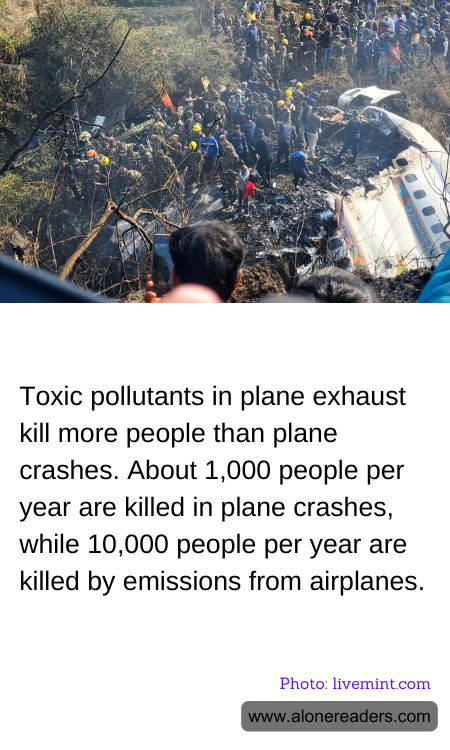
The health implications are severe and far-reaching. Studies estimate that emissions from airplanes result in around 10,000 premature deaths annually worldwide due to respiratory and cardiovascular diseases linked to air pollution. This number starkly contrasts with the approximately 1,000 people who perish in airplane crashes each year, highlighting an often overlooked aspect of air travel safety.
The impact of these pollutants is not limited to those living near airports but extends to vast areas, affecting populations in multiple countries due to the global nature of air currents and atmospheric circulation. Major airports can become hotspots of air pollution, but the effect of emissions can spread far beyond, covering large geographic areas.
To address this pressing issue, the aviation industry, along with international regulators, is exploring various strategies. These include developing more fuel-efficient engines, integrating sustainable aviation fuels, and considering electrification where feasible. Public awareness and policy measures are also crucial in mitigating the impact of existing air traffic and in shaping a sustainable future for aviation, balancing the needs for mobility and environmental conservation.
In conclusion, while the direct risks associated with flying, such as crashes, are more visible and often garner immediate attention, the broader and more persistent threat posed by airplane emissions requires equal, if not greater, scrutiny. As the aviation sector continues to grow, proactive steps are essential to ensure that air travel's benefits do not come at the expense of public health and the environment.
