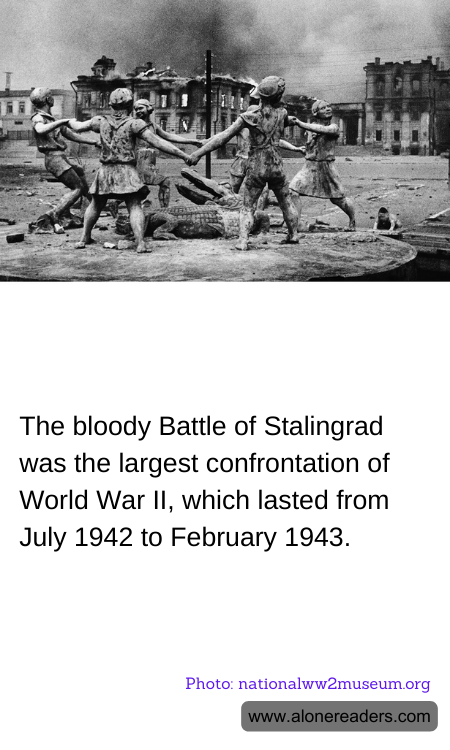
The Battle of Stalingrad stands as one of the most significant and bloody confrontations during World War II, marking not only a pivotal turning point in the Eastern Front of the war but also showcasing the brutal intensity of modern warfare. The battle began in July 1942, when the Nazi forces pushed to capture the Soviet city of Stalingrad, a strategic point on the Volga River. The significance of Stalingrad stemmed from its industrial capabilities and its position that provided control over critical transportation routes in southern Russia.
As the German Army, under the command of Friedrich Paulus, advanced, the Red Army, directed by General Vasily Chuikov, was pressed into its limits. The Soviet defense employed a strategy known as "hugging the enemy," where Soviet forces engaged in close-quarters combat within the city, thus neutralizing the Germans' advantage in heavy artillery and air support. This tactic turned the city into a deadly maze of ruins, where the distinction between frontline and civilian quarters often blurred, trapping soldiers and civilians alike in an unrelenting siege.
The battle is perhaps most notorious for its unprecedented ferocity and the sheer scale of human suffering. Both sides faced the horrors of urban combat, with aerial bombardments, artillery shelling, and street-by-street fighting causing massive destruction and casualties. Winter compounded the misery, with temperatures plummeting far below zero, adding frostbite and hypothermia to the already extensive list of combat hazards. The Soviet policy of "Not one step back" and the German directive of "no retreat" locked the armies in a deadly embrace, each unwilling to yield even an inch of ground.
After months of gruesome fighting, the Soviet forces launched a counteroffensive in November 1942, encircling the German troops. Following a bitter and desperate struggle, the German Sixth Army was finally compelled to surrender in February 1943, marking the first major defeat of Hitler's military forces. The victory at Stalingrad was not just a strategic triumph but also a significant psychological boost for the Allies, proving that the Axis powers were not invincible and setting the stage for the further Soviet advances westward.
The brutality and the scale of the Battle of Stalingrad have left a lasting legacy, symbolizing not only enormous sacrifice and endurance but also the horrific toll of war on both soldiers and civilians. The battle remains a testament to the resilience and determination of the human spirit in the face of overwhelming adversity.
