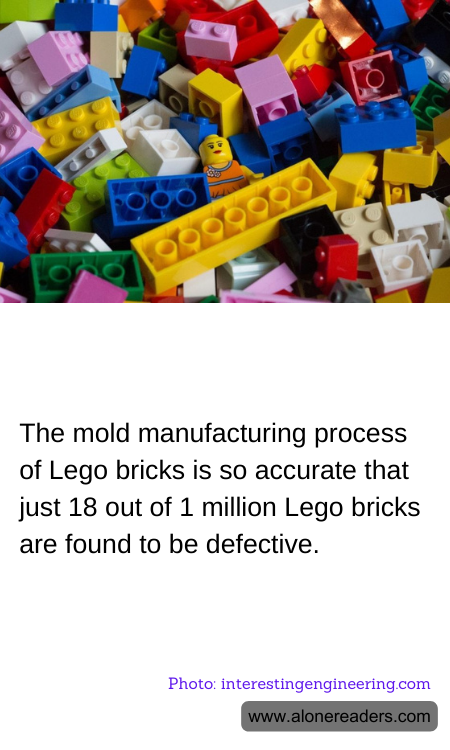
The production of Lego bricks is a marvel of modern manufacturing, characterized by its staggering precision and low defect rate. The iconic toy company boasts that only 18 out of every million Lego bricks produced are defective, highlighting the meticulous quality control processes and the advanced engineering involved in their manufacture.
Lego bricks are made from acrylonitrile butadiene styrene (ABS), a resilient plastic material that ensures durability and a tight fit. The manufacturing process starts with granulated ABS being funneled into molding machines where it is heated to 232°C until it reaches a dough-like consistency. It is then injected into molds at high pressure. These molds are the hallmark of Lego's precision; they are accurate to within 0.002 millimeters, ensuring that the bricks are uniform and fit together snugly.
After the molding process, the bricks undergo rigorous testing and quality control checks to verify their color, size, strength, and clutch power—the force required to assemble and disassemble them. This includes robotically testing the grip and release of bricks, ensuring that each piece will click together perfectly yet disassemble easily.
The minimal defect rate is also a testament to Lego's continual investment in technology and training. The company maintains the machines' high precision by frequently servicing their molds—some are even replaced after producing just 120,000 bricks. Moreover, Lego's commitment to consistent testing, both during production and post-production, ensures any potential defects are identified and rectified early in the process.
Ultimately, the near-flawless production of Lego bricks is not just about maintaining a beloved brand's reputation; it's also central to the company's promise of delivering a safe, reliable, and high-quality toy that can be enjoyed by children and adults alike. This near-perfect defect rate is a significant factor in why Lego remains a leading name in educational and recreational construction toys around the world.
