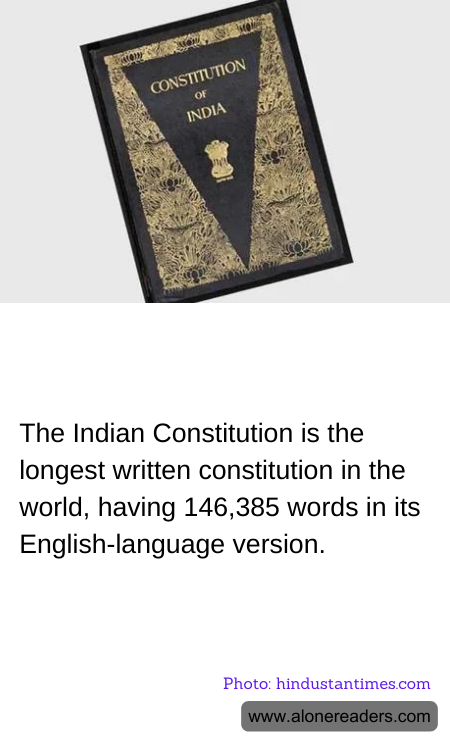
The Indian Constitution holds the distinction of being the longest written constitution in the world, with a whopping 146,385 words in its English-language version. This extensive document lays the foundational legal framework for the Republic of India, outlining the rights and duties of its citizens and the structure of its government. Adopted on November 26, 1949, and effective from January 26, 1950, the Constitution was crafted to address the diverse needs and challenges of India's vast landscape and pluralistic society.
The Constitution is comprehensive, encompassing detailed provisions concerning the administration, powers, and functions of legislative, executive, and judicial branches at both central and state levels. This detailed approach was deemed necessary to ensure governance that accommodates the country's ethnic, cultural, and linguistic diversity. It also amalgamates elements from several sources and traditions, such as British, Irish, American, French, and native principles of governance, making it a unique document reflective of its historical and ideological contexts.
Additionally, the Constitution is known for its emphasis on justice, liberty, equality, and fraternity, as articulated in the Preamble, which guides all the articles and provisions that follow. The rights guaranteed by the Constitution are not merely legalistic prescriptions but are articulated as fundamental rights, ensuring personal liberties and promoting the welfare of individuals. These include rights as basic as the right to equality (Articles 14-18), the right to freedom (Articles 19-22), and the right to constitutional remedies (Article 32).
The Constitution is also a living document, having undergone numerous amendments, over a hundred to date, to respond to the changing needs of its people. Each amendment reflects attempts to fine-tune the Republic's governance model to better achieve social, economic, and political justice. Noteworthy among these is the 42nd Amendment, often called the "Mini-Constitution," which brought about extensive changes to align the constitution with India's socialist and secular commitments during the Emergency period under Prime Minister Indira Gandhi.
The sheer volume of the Indian Constitution, along with its detailed and accommodating nature, not only exemplifies the foresight of its framers but also underscores the complexities inherent in governing such a diverse and populous nation. Its continued relevance and resilience in governing the world's largest democracy underscores its strength and vision, ensuring justice and equality for all Indian citizens.
