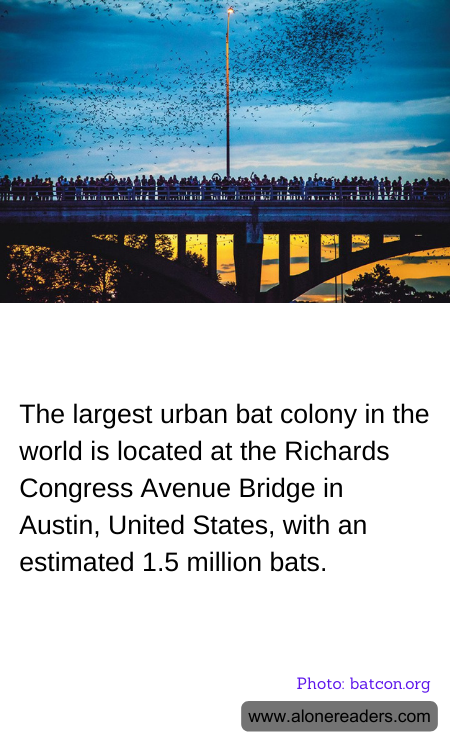
In the heart of Austin, Texas, the Richards Congress Avenue Bridge is not just an architectural feat but also the unlikely host to the world's largest urban bat colony. Remarkably, this bridge shelters an estimated 1.5 million Mexican free-tailed bats each summer, transforming it into a bustling hub of nocturnal activity and a fascinating spectacle of nature coexisting within an urban setting.
The colony consists primarily of female bats, which migrate from Mexico to this bridge in early spring. The location’s underside provides ideal conditions for the bats to give birth and nurture their young. By August, both the adult bats and their new pups begin their evening flights in search of food, creating an awe-inspiring sight against the backdrop of the Austin skyline.
This nightly exodus is not only a magnificent visual experience but also an ecologically beneficial one. The bats contribute greatly to controlling the insect population, as they consume large amounts of pests each night. Economically, they have become one of Austin's most unusual tourist attractions, drawing spectators from all around the world and providing a boost to the local economy through tourism related to bat-viewing.
Despite their critical role in the ecosystem and economy, the Mexican free-tailed bats of the Congress Avenue Bridge have faced challenges. Urban development and habitat disruption pose continuous threats. However, Austin has embraced its unique residents through conservation efforts and public education programs aimed at preserving the bats' habitat while maintaining the bridge's structural and functional integrity.
Community engagement and support have been pivotal in these efforts. The city hosts Bat Fest, an annual festival that celebrates the colony with live music, food, and bat-themed activities. Educational organizations in Austin also offer nightly viewings and talks during the bats’ active months, fostering a deeper appreciation and understanding among locals and visitors alike.
This unusual coexistence of urban development and a thriving bat colony at the Richards Congress Avenue Bridge stands as a testament to Austin’s environmental consciousness and its adaptability. It underscores a broader message that urban spaces can indeed support wildlife conservation, promoting biodiversity even in the heart of a bustling city.
