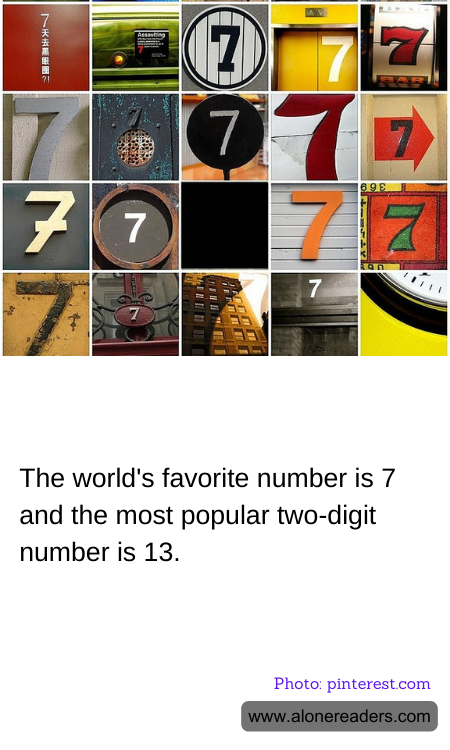
The allure of numbers transcends mere mathematics, touching on deep cultural, psychological, and superstititious significance. Among these, the number 7 stands out globally as the world's favorite number. This preference isn't just coincidental; it has deep historical and cultural roots. Across various cultures, 7 often holds a mystical or religious significance. It appears repeatedly in folklore and religion—think of the seven wonders of the ancient world, the seven days of the week, and the seven chakras in Eastern spiritual traditions.
What drives this universal appeal? Psychologists suggest that because 7 is among the numbers between 1 and 10, and it is not easily multiplied or divided within the decimal system, it appears more unique and thus sticks more readily in human memory. Moreover, the number 7 is often associated with positive outcomes and qualities. In Christianity, it symbolizes completeness, derived from the Genesis account where the world was created in seven days. In many cultures, it traditionally represents luck and prosperity.
Similarly remarkable is the popularity of the number 13 in the category of two-digit numbers, particularly in Western cultures. Unlike 7, the number 13 has a notorious reputation for bad luck. Fear of the number 13 is even identified as a specific phobia: triskaidekaphobia. This fear influences architectural decisions, such as the omission of a thirteenth floor in many hotels and commercial buildings. However, the notion of 13 as an unlucky number is not universal. In some cultures, 13 is considered lucky and a symbol of strength and prosperity.
The contrasting perceptions of 13 exemplify how cultural narratives shape our views on numbers. 13’s notoriety largely stems from Western interpretations, such as the association with the Last Supper, where Judas, the thirteenth guest, betrayed Jesus. Despite its infamy, the number 13 has its share of defenders and has been embraced positively in various contexts. For example, in the global sports world, athletes often choose 13 as a jersey number, flaunting it as a symbol of challenge against prevailing superstitions.
Interestingly, the world's fixation on numbers like 7 and 16 reflects a broader human tendency to find meaning and order in patterns, a trait that enhances our ability to make sense of the complex world around us. This fascination with numbers reveals not just a whim of irrationality, but a profound way that people connect across different cultures and histories, finding commonality in the numbers that shape our world.
