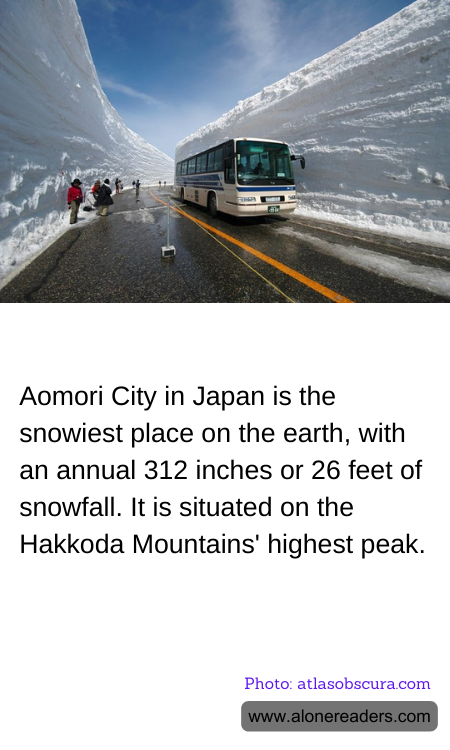
Aomori City, located in the northern part of the main island of Honshu, Japan, is renowned for being one of the snowiest places on earth. Each year, the city receives an astounding average snowfall of approximately 312 inches, which is equivalent to about 26 feet. This exceptional amount of snow is largely due to its geographical positioning. Aomori is situated at the convergence of cold air masses from Siberia and moist air currents from the Sea of Japan, resulting in frequent and heavy snowfalls during the winter months.
The city lies in the shadow of the Hakkoda Mountains, which are not only a spectacular sight but also contribute to the local climate's unique characteristics. The mountains serve as a natural barrier that traps the moist sea air, causing the snow to dump copiously on the city below. This phenomenon, known as 'snow accretion,' is what endows Aomori with its wintry mantle, transforming the landscape into a winter wonderland.
The incredible snow depths create a distinctive culture and lifestyle for the residents of Aomiri City. Snow removal becomes a daily activity, and the local infrastructure is uniquely adapted to handle the immense snowfall. Roads, homes, and vehicles are all designed with features to cope with the extreme winters. Winter sports are naturally a significant aspect of life here, with skiing, snowboarding, and snowshoeing being particularly popular.
Aomori is not only about snow; it is also rich in cultural heritage with a thriving tradition of festivals. Among these, the Aomori Nebuta Festival, held in August, is a spectacular event that features large illuminated floats and traditional music and dance, drawing visitors from across the world regardless of the season.
Despite the challenges posed by such extraordinary weather conditions, the people of Aomori exhibit resilience and a strong sense of community. The snow, rather than being seen purely as a challenge, is embraced as a central part of the city’s identity and cultural charm. Thus, Aomori remains a fascinating destination, whether cloaked in its snowy winter garb or in the lush greenery of summer. Its remarkable snowy season not only shapes the physical landscape but also molds the character of its people and the rhythm of life in this distinctive part of Japan.
